City DeskGuide
Old Town Toronto Walking Tour: Market, St. James and Beyond
A loop through Old Town Toronto: the Flatiron, St. Lawrence Market, St. Lawrence Hall, St. James Cathedral and an early post office, with a story at each stop.
Picture this block in the 1830s: the tallest building only three storeys high, Lake Ontario lapping against Front Street, and fields and forest beyond. That is how the City’s own walking tour sets the scene, and it is a good thing to hold in your head while you walk. This loop connects six stops in the neighbourhood the City describes as the place where downtown meets Old Town, with a story on every corner.
How do you get to the start?
The TTC’s Explore Toronto page has the simplest directions: take Line 1 to King Station, then head south on Yonge and east on Front Street East. That route drops you at our first stop without any planning.
Stop 1: Why is the Flatiron so photographed?
At Front, Wellington and Church you meet the Gooderham Building, which the City says was built in 1892 as the business headquarters of the Gooderham and Worts distilling company. The City tour dates it to 1892 as well and credits David Roberts Jr. as the designer. The “Flatiron” nickname, the City explains, comes from its shape resembling an iron of the day.
Walk around to the west side. The City notes a mural by Canadian artist Derek Besant there that is easy to view from Berczy Park. Curious about the company behind the building? Our history of the Distillery District picks up the Gooderham and Worts story.
Stop 2: What is inside St. Lawrence Market South?
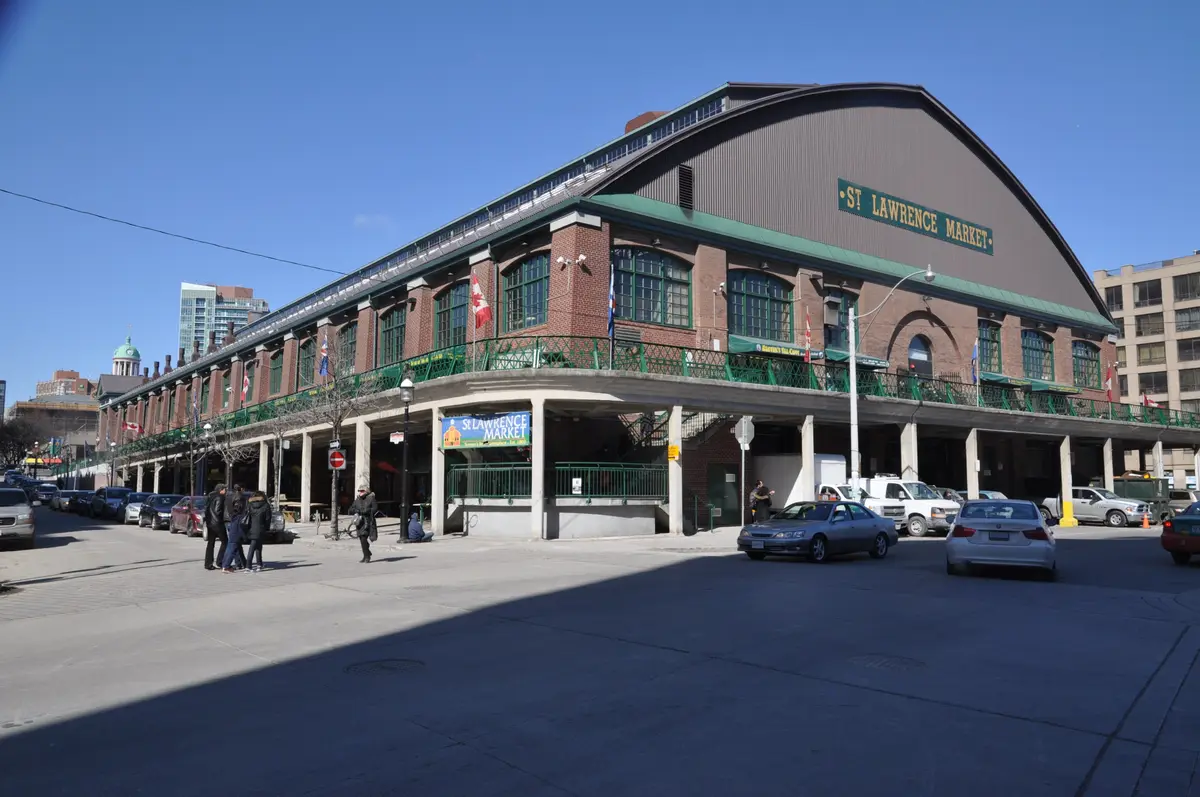
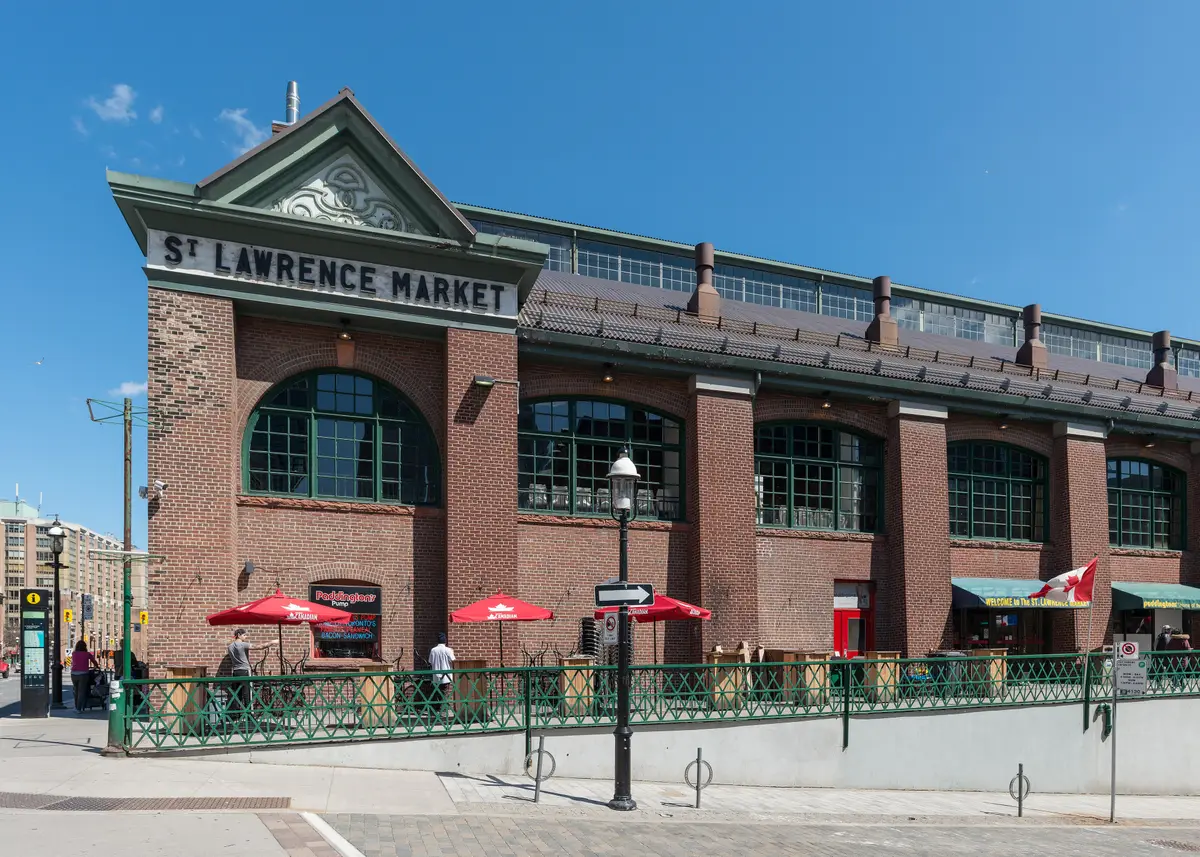
Continue east on Front. The City says the South Market holds more than 60 specialty vendors. The City’s tour adds that the front of the building dates to 1845 and was built as the first official City Hall in Toronto. Heritage Toronto dates the market itself to 1803.
Climb to the second floor if you like exhibitions. The tour says the Market Gallery sits in the former council chamber, and the City describes its exhibitions as the ever-changing face of Toronto, reflected through art and artifacts. Check the City’s page for what is on. If you want to eat, our St. Lawrence Market guide is the better map.
Stop 3: What changed at the North Market?
Cross Front Street to the North Market. The City says the building hosted its first Saturday Farmers’ Market on April 5, 2025, and describes the North Market as primarily known for that Saturday market. The City’s brochure puts it in a friendly phrase: Saturday at St. Lawrence Market has been a Toronto tradition since 1803, and “meet me at the market” is a local idiom. The longer story of the buildings is in our history of St. Lawrence Market.
Stop 4: Why does St. Lawrence Hall matter?
Head north to King Street East. Parks Canada says the Hall was built by the City of Toronto in 1850, designed by architect William Thomas in the Italianate style. The third floor was designed for a 1000-seat assembly room. The City describes the Hall as one of Toronto’s most celebrated heritage venues.
Its history reaches well beyond balls and concerts. Parks Canada designated the Hall a national historic site in 1967 and says its events included several important Abolition meetings in the years when Canada was receiving thousands of Underground Railroad refugees from American slavery. The City’s tour adds that the Anti Slavery Society met there regularly, and that in September 1851 members of the Black community in Toronto and across the province organized the Convention of Coloured People, the name the tour uses.
Stop 5: What is special about St. James Cathedral?
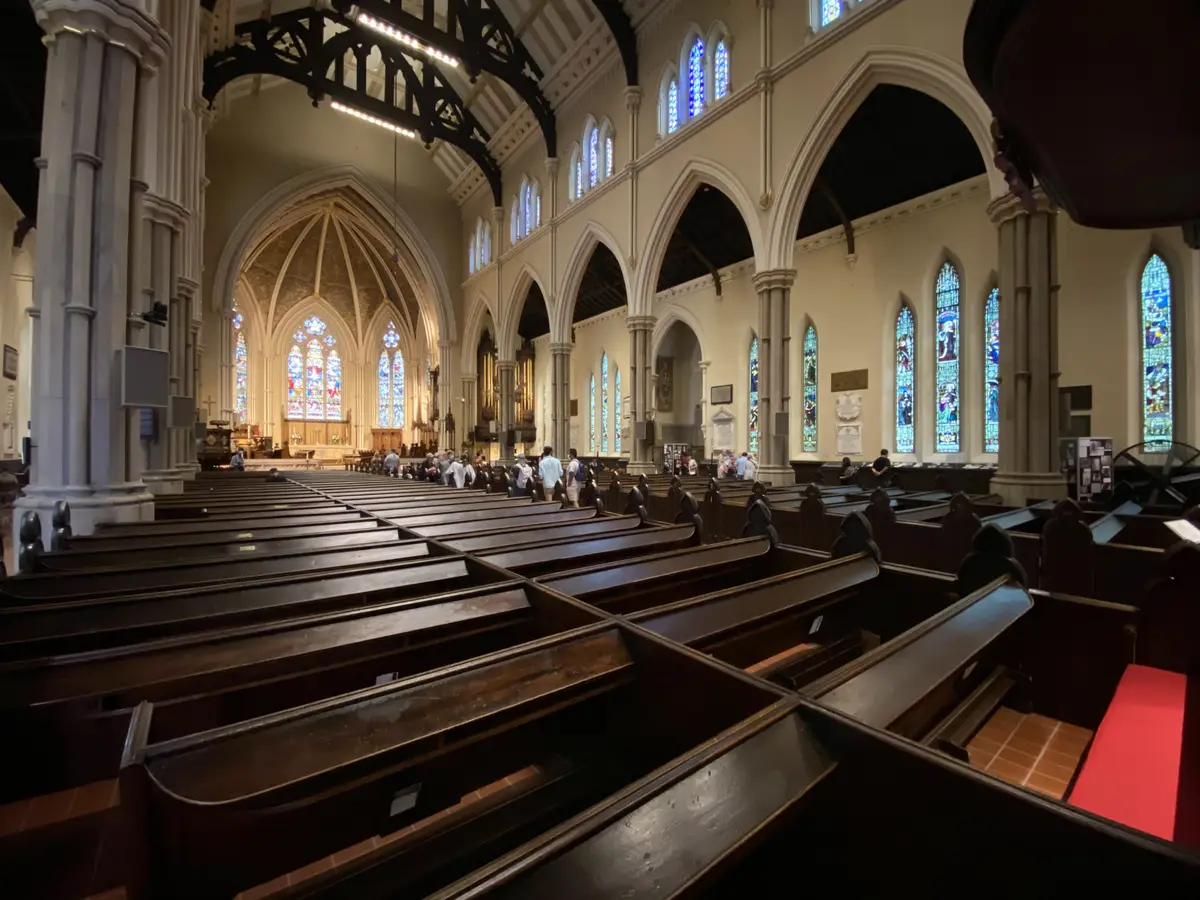
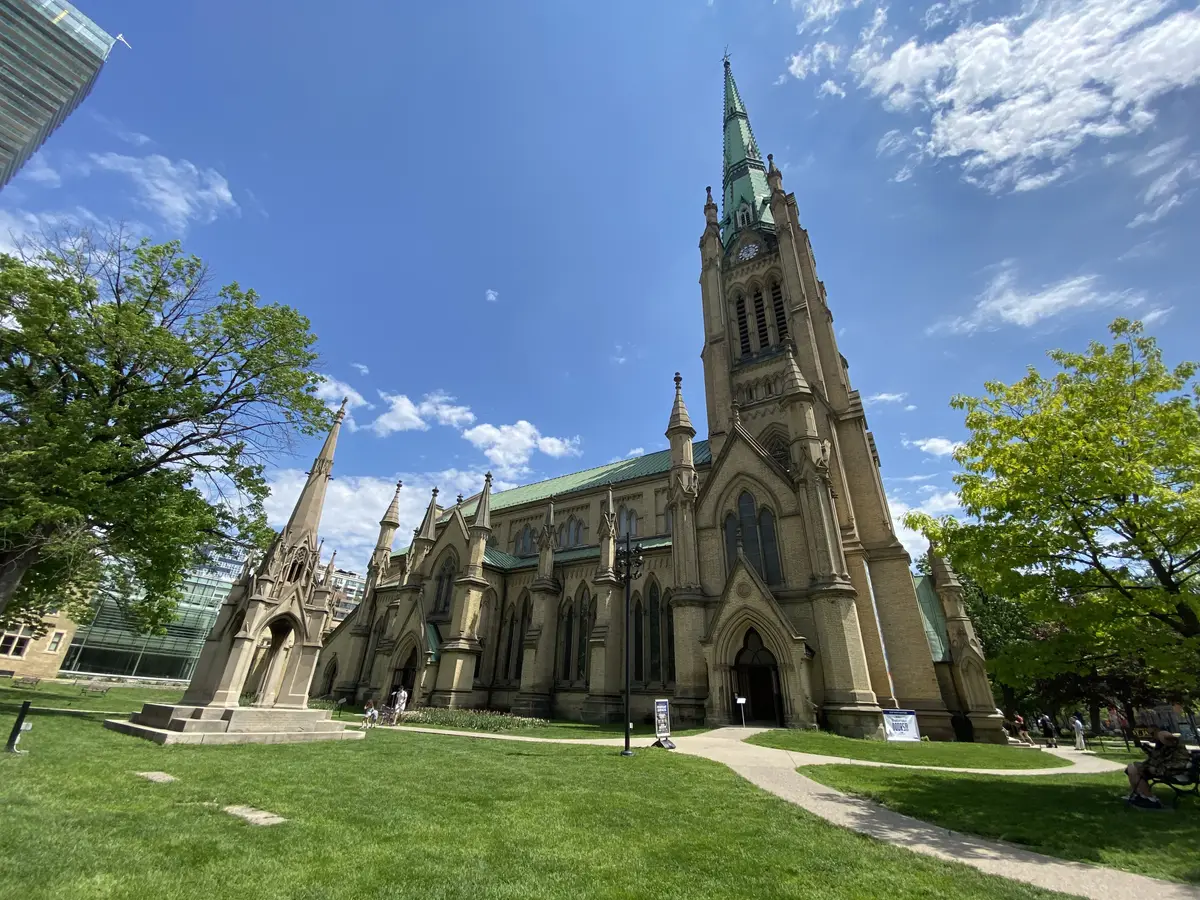
Walk west along King to Church Street. The cathedral’s own timeline says the first Church at York was built of wood in 1807 with the help of the garrison, and that the Gothic Revival cathedral you see opened for services on the original site in 1853.
Look up. The cathedral says its tower and spire rise 305 feet above the street. It dates the spire to 1875, while the City’s tour gives 1874. Either way, the tower is hard to miss. The cathedral says its tower holds a peal of twelve change-ringing bells, and that the Bells of Old York, installed in 1997, can be heard pealing on a weekly basis in the St. Lawrence neighbourhood. Check the cathedral’s site for visiting times, since services come first.
St. James Park, next door, was originally the church’s cemetery, where many of the town’s first settlers were buried, the City says. The City adds that it is a great place to take pictures of St. Lawrence Hall and the Cathedral.
Stop 6: What can you see at the First Post Office?
Finish on Adelaide Street East. The City’s tour says the building at number 260 was constructed for postmaster James Scott Howard in 1833. Parks Canada, which lists it as the Fourth York Post Office, calls it one of the earliest surviving examples in Canada of a building designed specifically for use as a post office. Parks Canada lists it as a national historic site of Canada. It forms the eastern part of a group of buildings that includes the Bank of Upper Canada Building National Historic Site of Canada.
The City’s tour adds that the Bank of Upper Canada building, at 252 Adelaide Street East, was the first permanent home of the bank, chartered in 1821. Today the post office is run by the Town of York Historical Society as a museum, National Historic Site, stationery gift shop and authorized full service dealer for Canada Post. Its own site calls it Canada’s oldest purpose-built Post Office still in operation. Check the museum’s site for opening times and closure notices before you go.
Want a longer walk?
The museum also offers a complimentary self-guided walking tour, “A Stroll through History,” through the original ten square city blocks of the Town of York. The City’s shoreline note is a good thing to keep in mind as you go: the original harbour shoreline ran just south of today’s Front Street and formed the front door of the Town. For a wider downtown loop, try our downtown Toronto walking tour, or read more on the St. Lawrence neighbourhood page.
Send this to the friend you would bring on a slow walk with a good story at every corner.
Sources (15)
- From Town to City and Beyond: A Self-guided Historical Walking Tour of the St. Lawrence Neighbourhood, City of Toronto
- Old Town Toronto West: Where downtown meets Old Town, City of Toronto
- Explore Toronto: Civic and Historic Sites, Toronto Transit Commission
- St. Lawrence Market North redevelopment, City of Toronto
- Market Gallery, City of Toronto
- Building Toronto: St. Lawrence Market, Heritage Toronto
- St. Lawrence Hall National Historic Site of Canada, Parks Canada
- St. Lawrence Hall rentals, City of Toronto
- History, The Cathedral Church of St. James
- Architecture, The Cathedral Church of St. James
- What's On at St. James, The Cathedral Church of St. James
- Fourth York Post Office National Historic Site of Canada, Parks Canada
- Post Office museum home page, Town of York Historical Society
- Upcoming Events, Town of York Historical Society
- Self-Guided Walking Tours, Town of York Historical Society
Spotted something out of date? Let us know.
How did this land?
Share this
“Saving this for a slow Saturday: an Old Town Toronto walk from the Flatiron to St. Lawrence Market, St. James and an early post office.”