Archive DeskFeature
History of East York: A Small Township's Big Toronto Story
East York voted to go its own way in 1923 and built its own schools, hydro, hospital and library. Follow the township from market gardens to Line 5.
Imagine deciding your neighbourhood deserves its own council, its own lights and its own library, and then going out and building all of it.
How did East York become its own township?
It started with a vote. Area residents voted overwhelmingly in 1923 to separate from York Township. East York was incorporated as a township on January 1, 1924. At its founding, East York had a population of just under 20,000 people.
The new township was ambitious, and it had a lot to build. Early East York had few roads and schools, no sewers or sidewalks, and most dwellings lacked electricity and indoor plumbing. Archive photos show market gardens on Mortimer Avenue around 1910 and Pape Avenue and Bee Street (later Cosburn Avenue) in 1911.
What was here before the township?
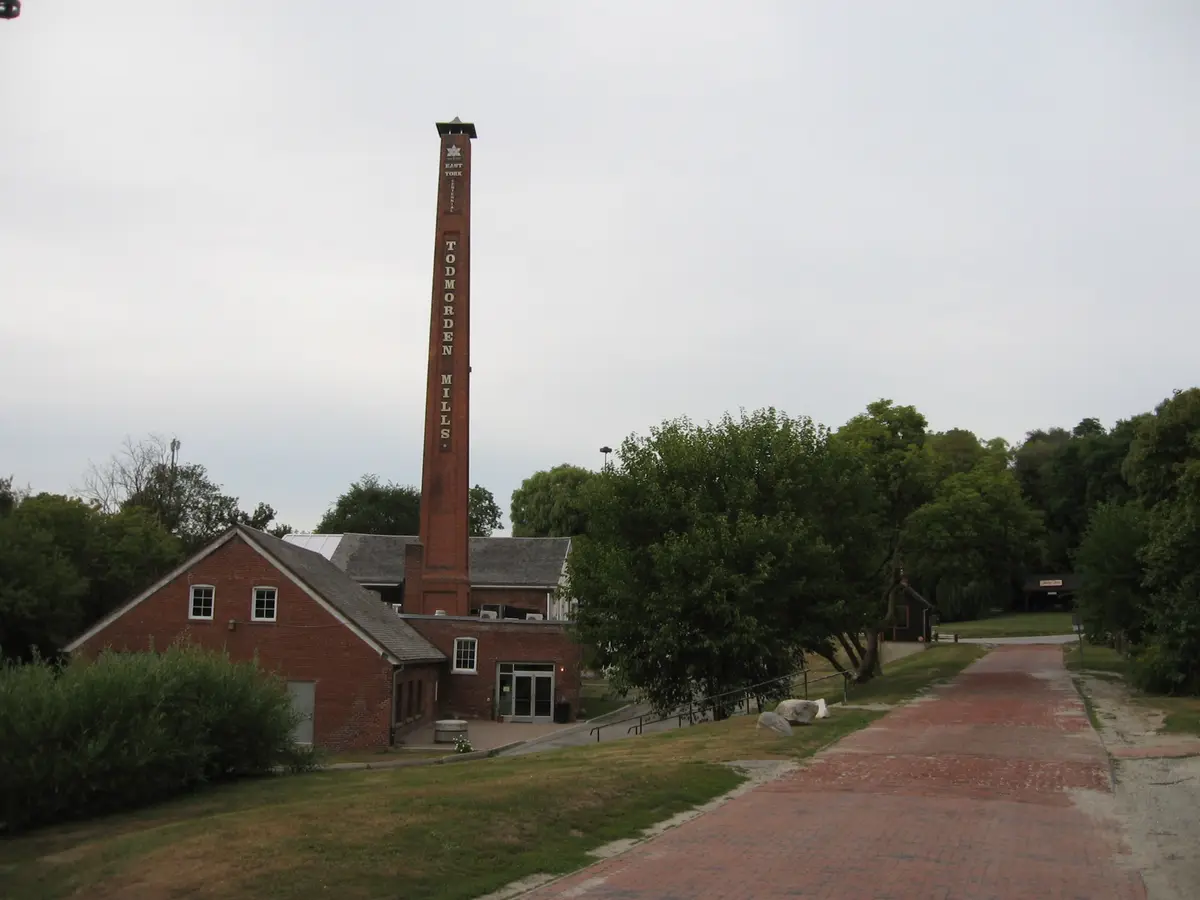
Start at the valley’s edge. In 1821 the Helliwell family settled in the Todmorden area and established a brewery and distillery, and they re-named the area Todmorden after their home town in Lancashire, England. The Todmorden paper mill, now the Papermill Theatre and Gallery, was the first of its kind in Upper Canada.
You can still visit, and the site’s trail winds through several different habitats, including upland forest on the slopes. Todmorden Mills Heritage Site opened to the public in 1967 as part of East York’s contribution to Canada’s centennial. For a township that loved to build, it is a fitting piece of its own story to preserve.
How did East York build a township from scratch?
Quickly. The municipality grew with the construction of new homes, and growth brought schools, infrastructure, a hospital, police and fire services, a hydro-electric commission and a local transit line. Council first met at the York Township office at 40 Jarvis Street, then within a month moved to a former York Township Works yard at 443 Sammon Avenue.
The milestones came in a rush:
- East York Hydro began operations on January 1, 1926.
- East York High School opened on October 3, 1927 with nearly 100 students and was renamed East York Collegiate Institute three years later.
- The four-storey, 110-bed hospital opened in 1929, and today its main facility is known as Michael Garron Hospital.
- In late 1928 the Fire Board was disbanded to make way for the formation of an East York Fire Department.
Why does the Leaside Bridge matter to East York?
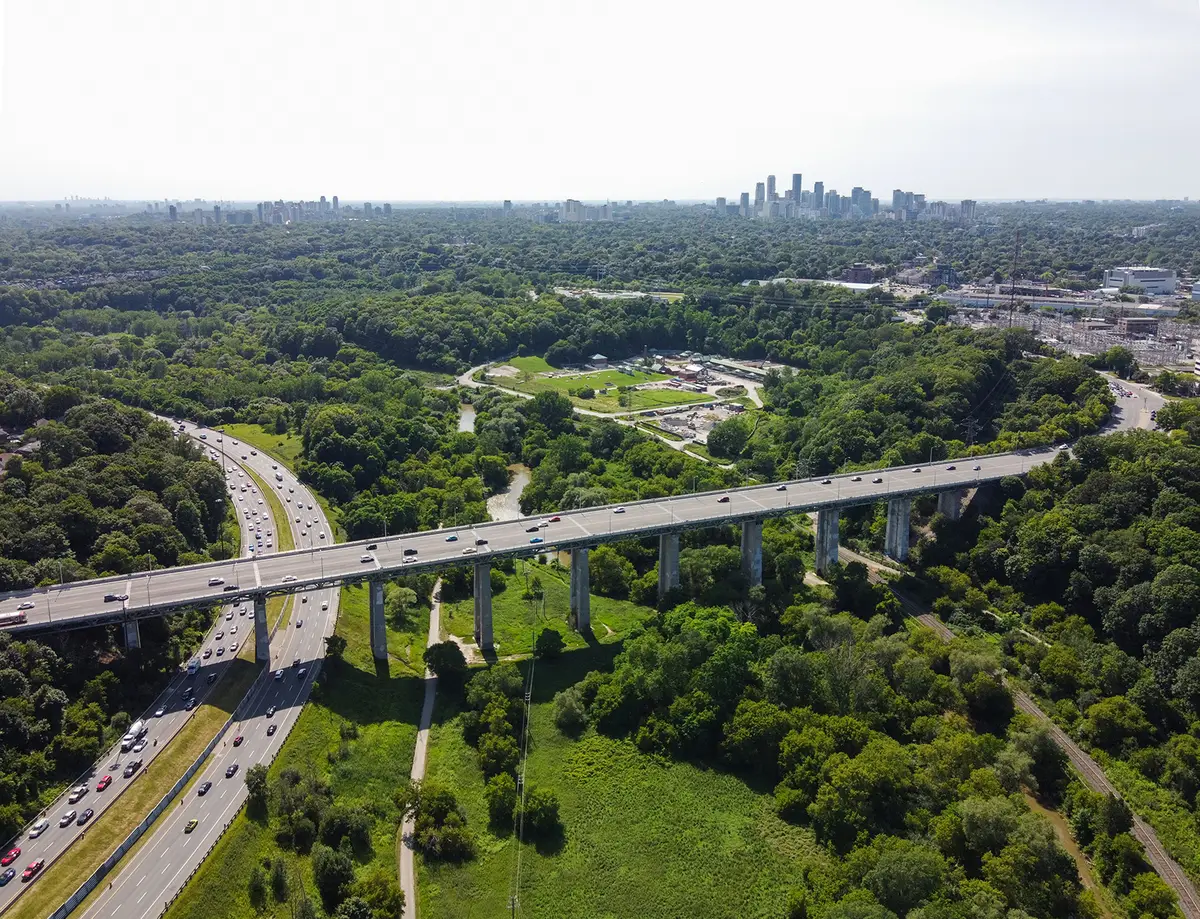
Another landmark of the era. The Leaside Bridge was opened on October 27, 1927 by Lieutenant Governor William Donald Ross and was originally named the Confederation Viaduct.
On January 1, 1967, the Town of Leaside merged with East York and became part of the new Borough of East York. If you want the Leaside side of the story, our Leaside guide walks the same streets.
What did postwar East York add?
Parks, books and a proper town hall. In January 1946 East York hired Stan Wadlow as its first recreation director, and Cedarvale Park was renamed Stan Wadlow Park in October 1979. East York residents voted in a January 1946 referendum to create a public library, and the S. Walter Stewart Library officially opened on October 3, 1960.
Stan Wadlow Park began as an 8.5-hectare park at Cosburn Avenue and Cedarvale Drive, and East York’s first outdoor pool there opened in 1948, followed three years later by the East York Memorial Arena. The first community-wide Dominion Day celebrations were held on the grounds of East York Collegiate Institute in 1960. Picture a township finding its rhythm: fields, a pool, an arena, a big summer party.
The East York Municipal Offices at 550 Mortimer Avenue opened on September 25, 1948, and the East York Civic Centre opened on September 21, 1990. The Civic Centre was the municipality’s last seat of government before the 1998 amalgamation with Toronto.
How do the Danforth and Pape Village fit in?
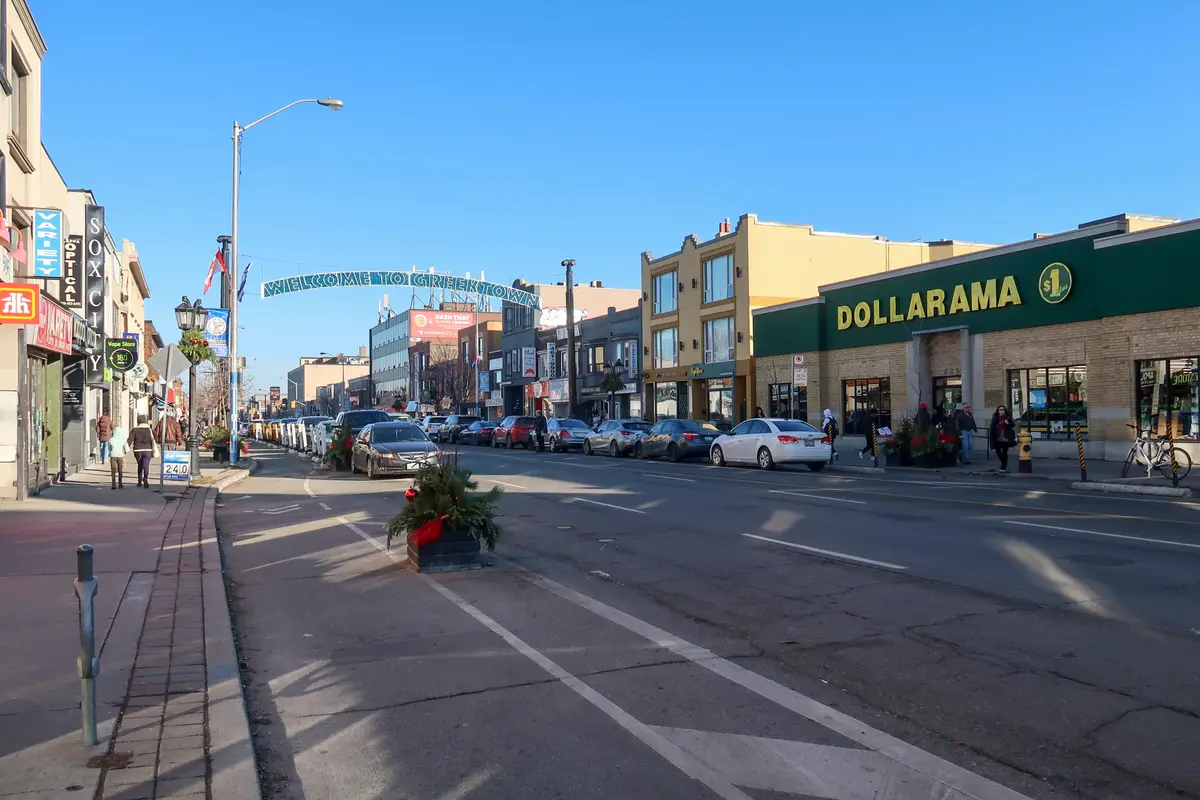
They are the street-level face of the story. The GreekTown BIA says that in the 1970s and early 1980s its area was considered the largest GreekTown in North America. The Danforth BIA was established in August 1981 as the Danforth Village Business Improvement Area, and its name was officially changed to GreekTown on the Danforth in June 1993. For a plate-by-plate walk through that strip, see our Greek food on the Danforth guide.
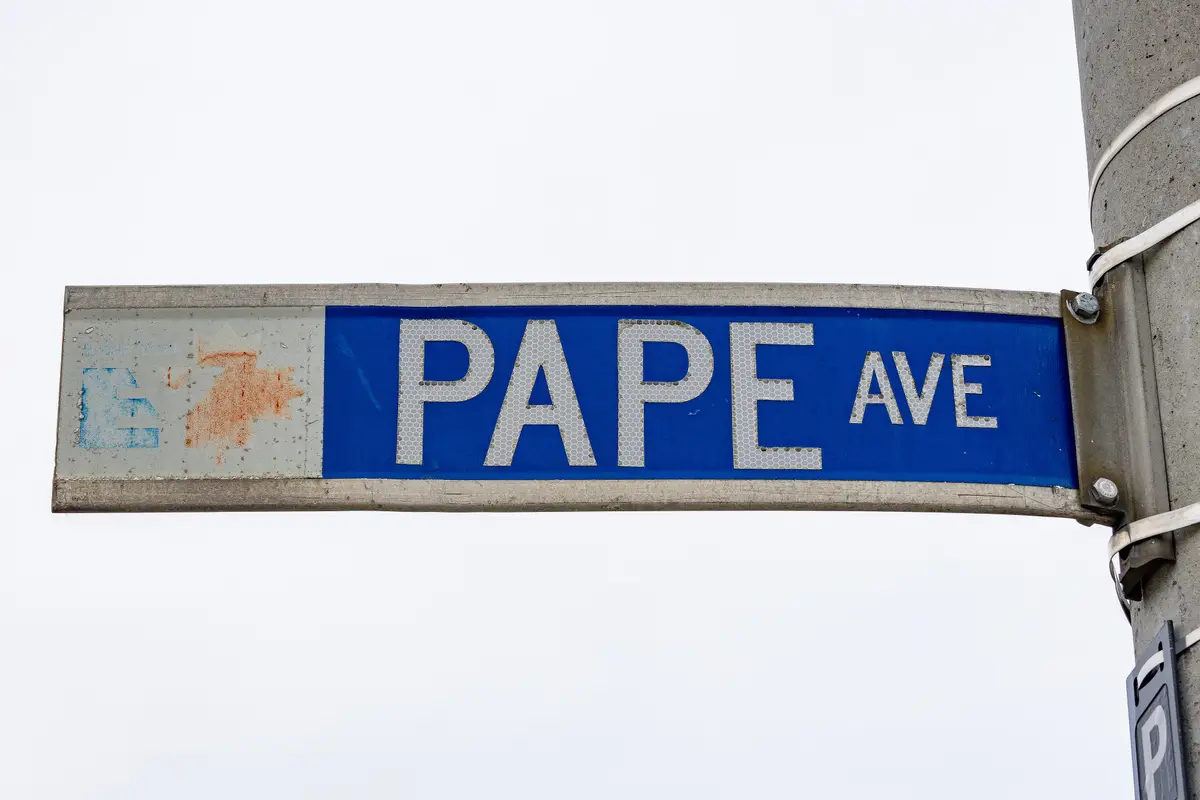
Pape Village runs along Pape Avenue from Mortimer Avenue to north of Gamble Avenue and includes boutiques and locally-run eateries. It is a good place to feel how a neighbourhood keeps evolving.
How can you explore East York’s history on foot?
Build a loop. Begin at Todmorden Mills for the valley story, head up to Stan Wadlow Park for the postwar story, and finish near the library or Civic Centre for the story of how a township ran itself. Between stops, notice the street grid, the school buildings and the corner shops. Local history is rarely hidden in one museum; it tends to sit quietly on the way to lunch.
What is East York’s next chapter?
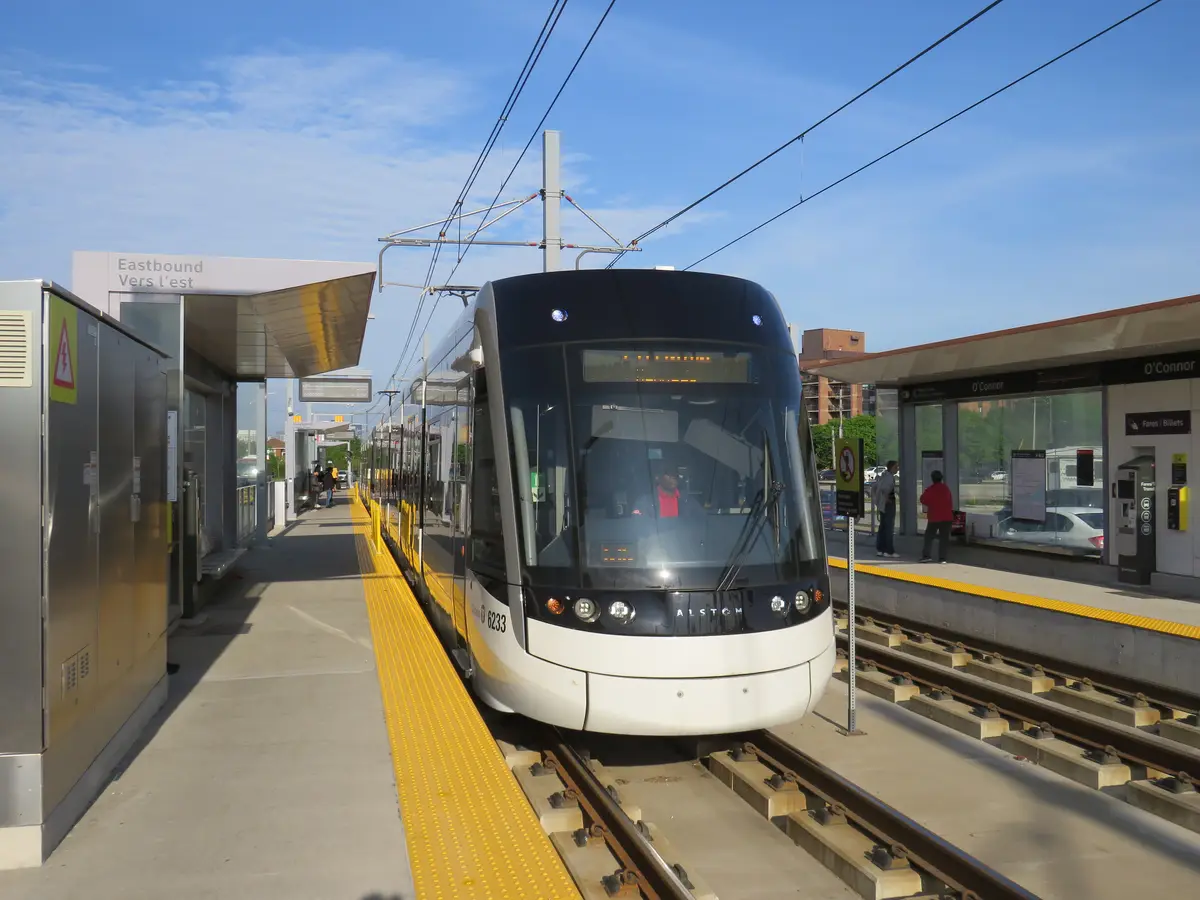
Look at the transit map. Line 5 Eglinton began an introductory service period on February 8, 2026. It stops at Leaside Station, in a neighbourhood that merged with East York in 1967, and our Line 5 Eglinton guide shows what to see along the way.
The City of Toronto Archives marked the centenary of the former municipality with a web exhibit. Start there if you want to dig into photographs, plans and dates. For a map of the whole area, use the East York neighbourhood hub, or zoom out to the history of Toronto.
Send this to the friend who thinks a township is just a word on a map.
Sources (9)
- East York 100: A New Municipality, City of Toronto Archives
- East York 100: Edifices and Education, City of Toronto Archives
- East York 100: Structures and Services, City of Toronto Archives
- East York 100: Learning and Leisure, City of Toronto Archives
- Todmorden Mills, City of Toronto
- History, GreekTown on the Danforth BIA
- About Pape Village, Pape Village BIA
- Eglinton Crosstown LRT: What We're Building, Metrolinx
- TTC to begin phased start to service on Line 5 Eglinton, TTC
Spotted something out of date? Let us know.
How did this land?
Share this
“Did you know East York once voted to go its own way? The township story, from market gardens to Line 5.”