Archive DeskFeature
St. Lawrence Market History: Two Centuries on One Toronto Block
From a market block proclaimed in 1803 to the North Market that opened in 2025, here is how one Toronto corner kept rebuilding itself, with the dates sourced.
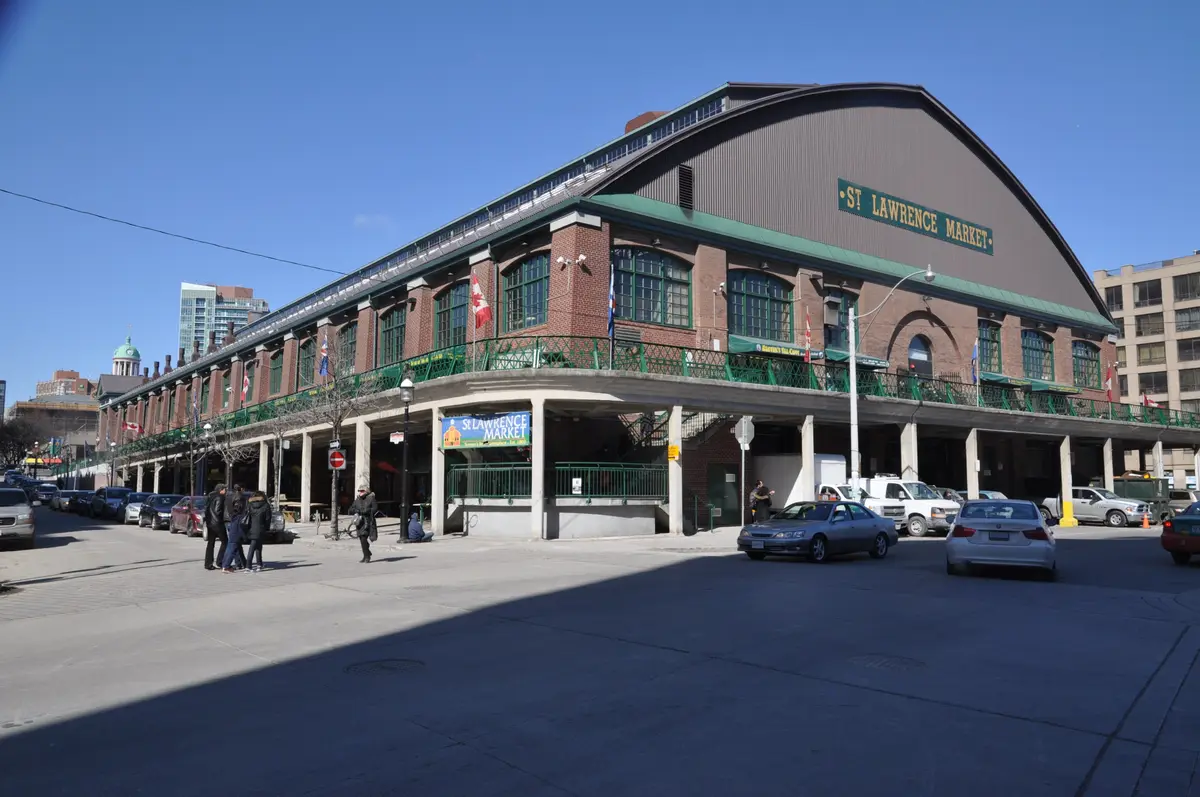
Stand at the corner of Front and Jarvis and you are on a block that the City says has served as a landmark for more than 200 years. Nobody planned that run in one go. The market was built, rebuilt, moved a little, rebuilt again, and somehow kept being the place where Toronto shops.
Who started the market in 1803?
Heritage Toronto dates St. Lawrence Market to 1803 and calls it the city’s oldest. Lieutenant Governor Peter Hunter declared the first public market open, welcoming merchants, farmers and residents of the region to buy and sell their provisions. The City’s walking brochure describes the Market Block he established as the land north of Front, west of Jarvis, south of King and east of Church Street.
The site had a trading past before that. Heritage Toronto notes that Indigenous peoples and European settlers used this area to trade and exchange goods long before the current market building was built. People came a long way to the new market, including Chief Wabakinine of the Mississaugas, who sold salmon there. Inns and taverns lined Yonge and King Streets to serve those who made the multi-day trek.
Where was the very first market?
It depends which Heritage Toronto page you read, so here are both. Its Building Toronto page says the first market occupied the northwest corner of Front and Jarvis Streets, later also the site of Toronto’s first city hall. Its Creating Toronto tour says the portion of land on which St. Lawrence Hall now sits was designated as a public market space in 1803.
How many market buildings has this block had?
Quite a few. The City’s walking tour lists market buildings in 1820, 1831, 1849 and 1904. After the City was incorporated in 1834, council members met in the second market building, at the southwest corner of King and Jarvis. By the time of the Great Fire of 1849, Heritage Toronto says, the first market had already been replaced by a series of wooden and brick buildings.
When did the South Market become Toronto’s City Hall?
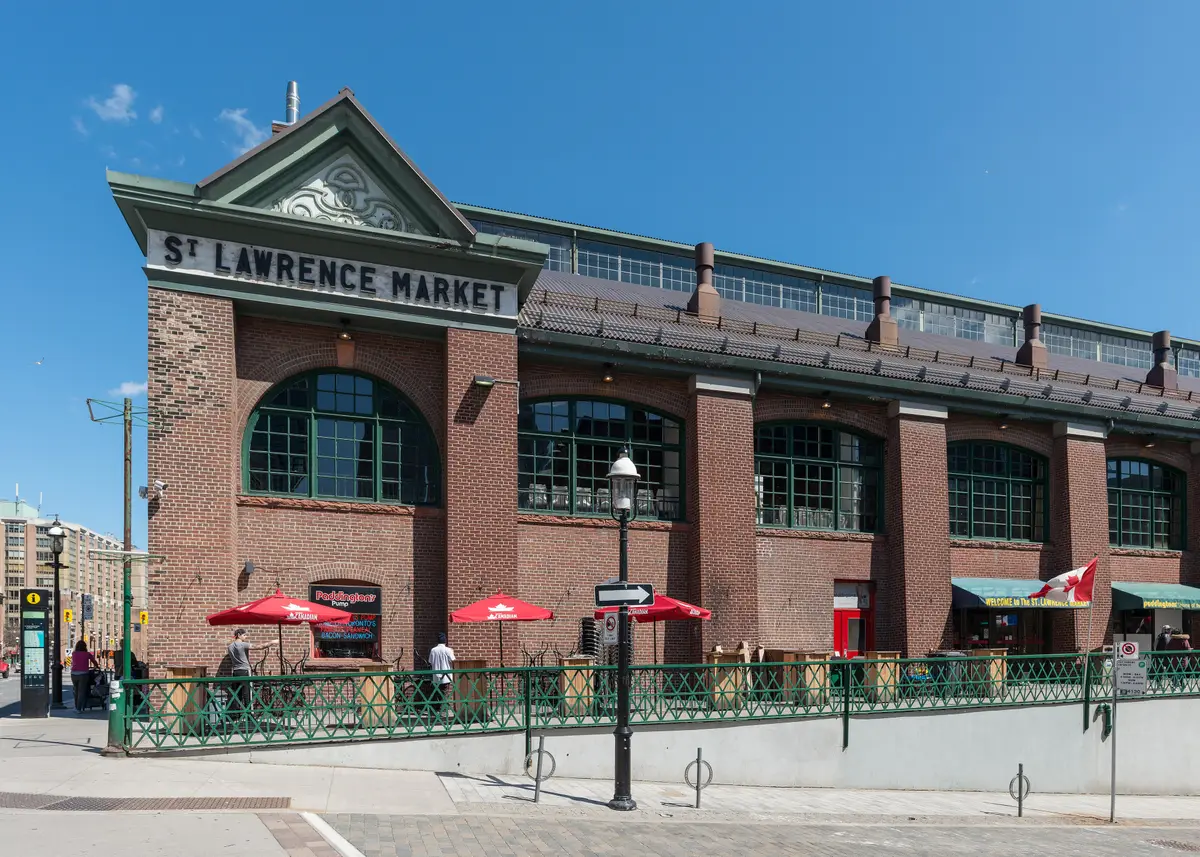
In 1845, when a joint city hall, police station and market building opened on the south side of Front Street. The City’s tour calls the front of today’s South Market the first official City Hall in Toronto. Heritage Toronto adds that a portion of the current South Market housed the city council chambers, a jail and government offices, with shops in the wings.
Councillors eventually outgrew it. Council left in 1899 for Old City Hall at Queen and Bay Streets. The City says what was once Toronto’s first purpose-built City Council Chambers now houses rotating exhibits on the city’s history, in the Market Gallery.
What came after the fire of 1849?
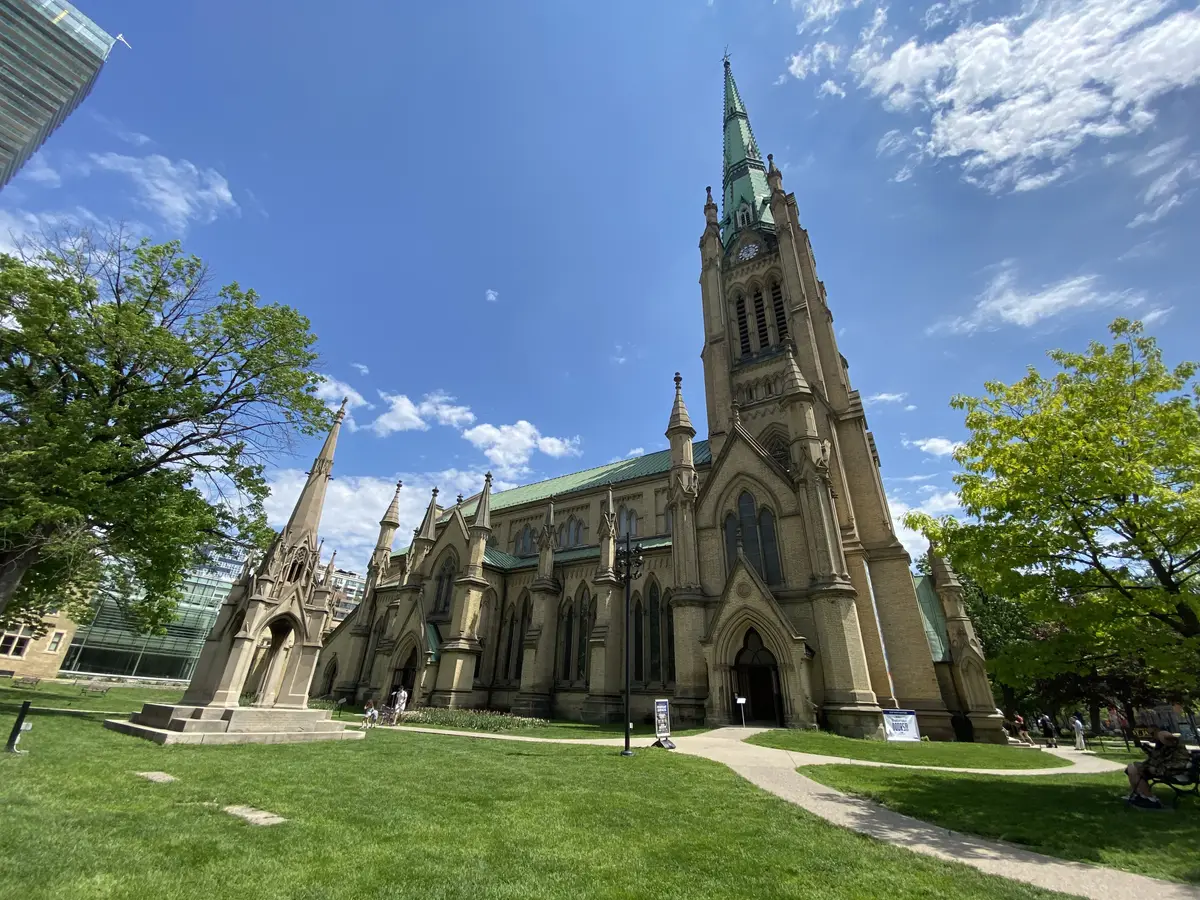
A hall with a gas-lit reputation. The City’s Old Town brochure says the market building was rebuilt to the south and St. Lawrence Hall opened in 1850 on the previous market site. The City tour adds that William Thomas designed the Hall after the great fire destroyed a large section of King Street East. If you like the sound of that, our Old Town walking tour puts the Hall on a route with St. James Cathedral and the Flatiron.
When was the South Market we see today built?
Here the sources politely disagree, so we give each in its own words. The City’s St. Lawrence Neighbourhood tour says the 1845 building was renovated, its side wings and cupola removed, and that the building has hardly changed since 1902. The Old Town West brochure gives 1901 for the main building, which includes the centre block of the 1845 City Hall designed by Henry Bowyer Lane. The Canadian Encyclopedia says that when civic offices moved to the new city hall in 1898-99, the old building was reconstructed as a larger market, and that the new building was nicknamed Siddall’s Shed after its architect, John William Siddall.
We will not pick a winner between 1901 and 1902. The surprise is how much of the 1845 core is still there.
What happened to the North Market?
Across Front Street, Heritage Toronto says a matching building on the north side was demolished and replaced in 1968. The South Market had its own close call: threatened with demolition in 1971, it was saved when citizens petitioned for its preservation. Toronto, as we keep saying, will fight for a market hall.
The 1968 building’s own exit turned into a dig. A City staff report says archaeologists found evidence of early market buildings from the 1820, 1831, 1851 and 1904 periods, including central drains, lateral brick and stone drains, market walls, storage cellars and support columns. The City describes the archaeology as representative of a rare and important early market period within the original Town of York, and as one of Canada’s earliest commercial markets. A City budget report describes extra project funding so the new building could accommodate a section of the 1831 central drain for public viewing and interpretation.
Demolition, with the archaeological assessment, was completed in April 2017. The new North Market building hosted its first Saturday Farmers’ Market on April 5, 2025, and a grand opening community event followed on May 10, 2025. For what to eat there now, our St. Lawrence Market eating guide is the companion piece.
Why has Saturday always mattered?
The City’s brochure says Saturday at St. Lawrence Market has been a Toronto tradition since 1803, and that “meet me at the market” is a local idiom. It also gave us a sandwich. Heritage Toronto says William Davies arrived in Canada and set up a stall selling a cut of pork that became a signature food at the market: peameal bacon. Our peameal bacon sandwich guide picks up that thread.
There is a fun one for the trivia night, too. The City’s brochure notes that Toronto’s first public well was dug in 1823 near what is now Market Lane Park. And Heritage Toronto’s page for the market repeats a line crediting National Geographic with calling it the world’s greatest food market.
If you are exploring the wider neighbourhood, start at the St. Lawrence neighbourhood page. Send this to the friend who always says “meet me at the market.”
Sources (8)
- Building Toronto: St. Lawrence Market, Heritage Toronto
- Creating Toronto: St. Lawrence Market, Heritage Toronto
- From Town to City and Beyond: A Self-guided Historical Walking Tour of the St. Lawrence Neighbourhood, City of Toronto
- Old Town Toronto West: Where downtown meets Old Town, City of Toronto
- Toronto Feature: St Lawrence Market, The Canadian Encyclopedia (Historica Canada)
- Redevelopment of St. Lawrence Market North, Budget Amendment, City of Toronto
- St. Lawrence Market North redevelopment, City of Toronto
- Market Gallery, City of Toronto
Spotted something out of date? Let us know.
How did this land?
Share this
“Saving this for Saturday: the story of St. Lawrence Market, from the 1803 Market Block to the new North Market.”