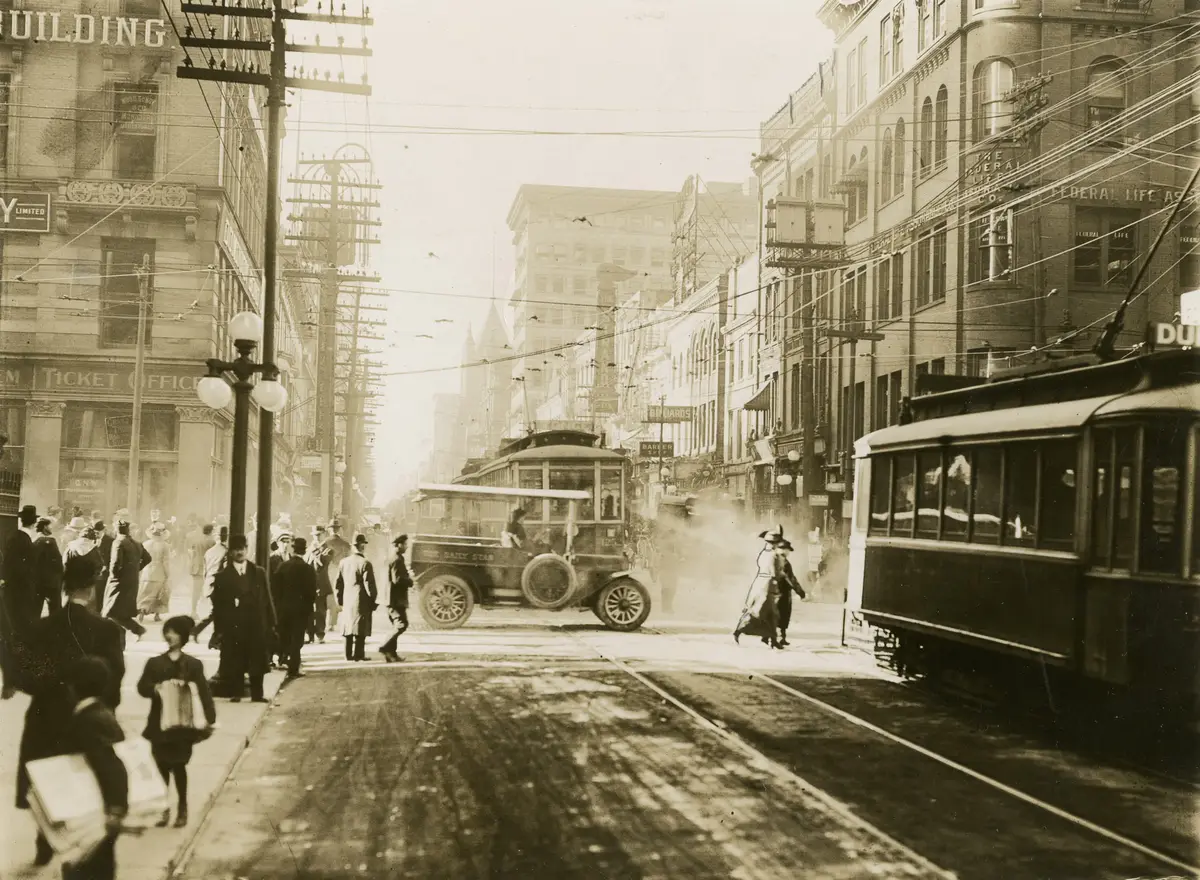
Archive DeskThen and now
Union Station Toronto History: Three Stations, One Street
Toronto has had three Union Stations along Front Street. See how the 1850s station, the domed 1870s landmark and today's Great Hall compare.
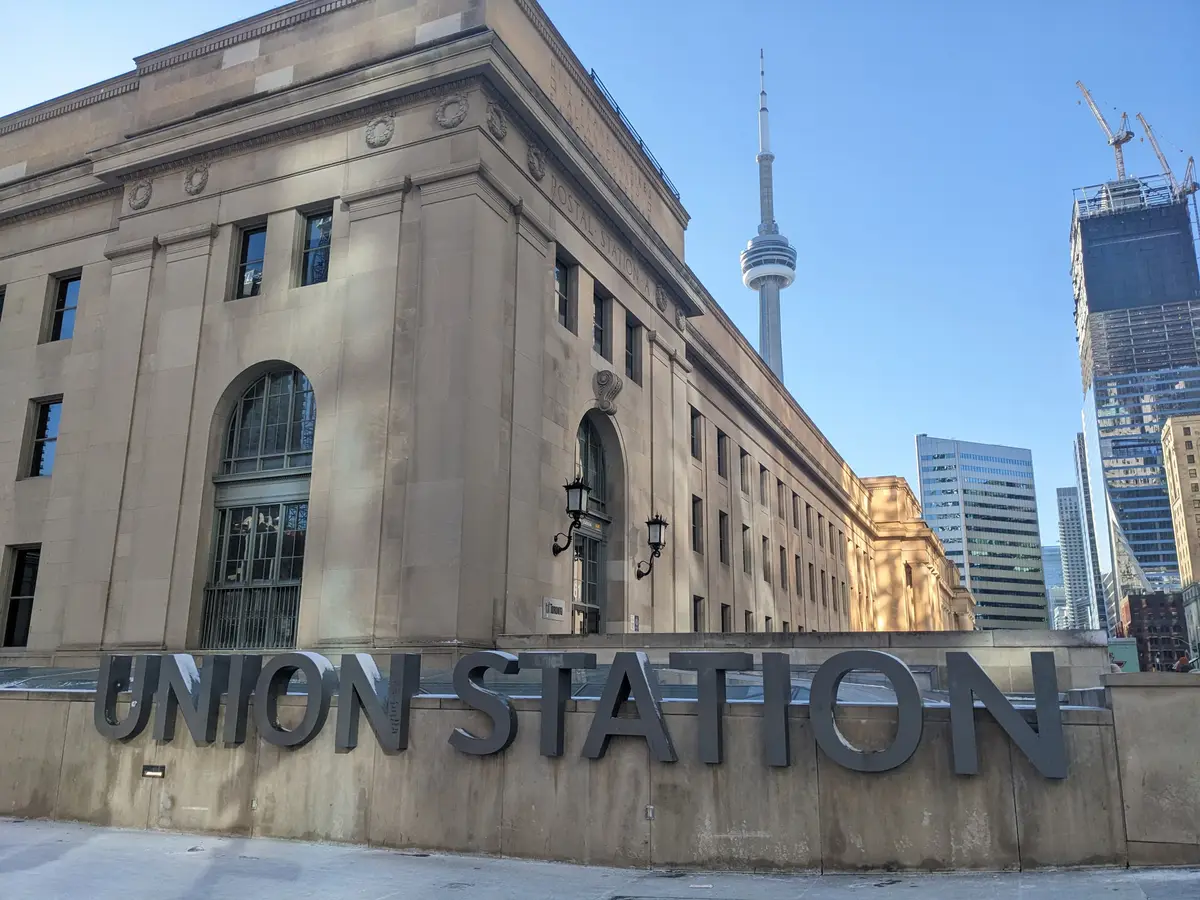
Stand in the Great Hall and look up, and you are standing inside Toronto’s third try at a Union Station.
How many Union Stations has Toronto had?
Three, and the City of Toronto’s own history page tells the story in order. The first was a wooden station from the railways’ early days. The second was the domed landmark of the late 1800s. The third is the stone Beaux-Arts station you walk into today.
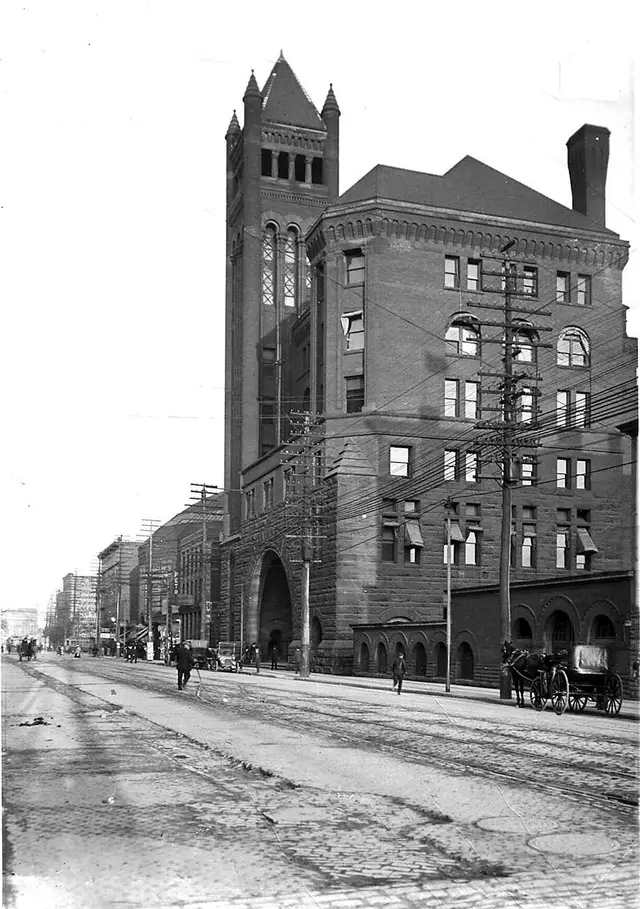
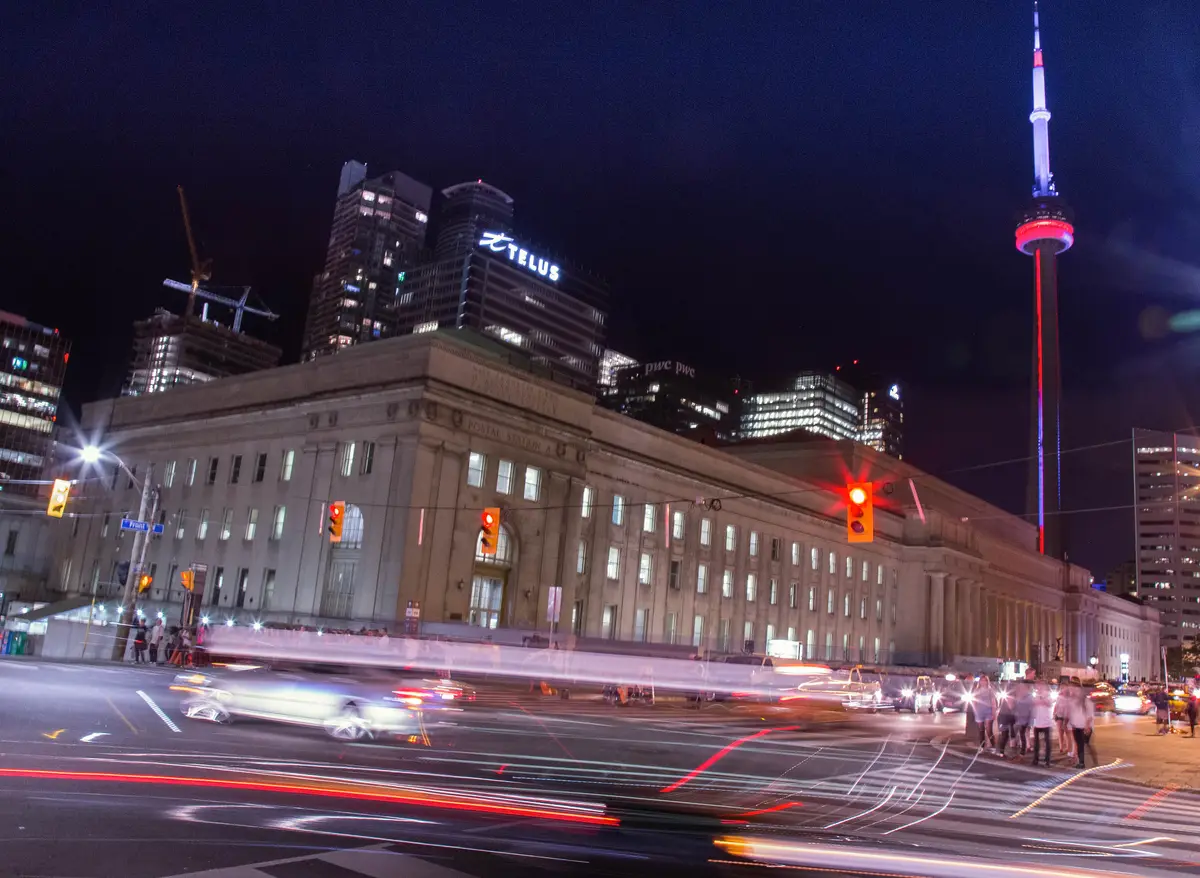
Drag the slider above and you are comparing two different buildings that shared an address, more or less. The second station stood on Front Street between York and Simcoe Streets, and the current one fills the block between Bay and York.
What was the first Union Station?
A shared railway station with a big idea. The City says the Grand Trunk Railway established a station at Front and Bay in 1855, and that it became Toronto’s first Union Station in December 1855 when the Great Western Railway arrived to share it. Toronto Public Library gives 1858 as the opening year and describes a wooden building shared by the Grand Trunk, Northern and Great Western railways.
Two sources, two years, one humble first station. Either way, the “union” in the name was about railways sharing one facility.
What did the second station look like?
Like something you would put on a postcard. The City says the earlier station was built in 1872, and Toronto Public Library says it opened on July 1, 1873. It was designed by E. P. Hannaford, Chief Engineer of the Grand Trunk Railway, modelled on the Illinois Central Station in Chicago, and topped with three domed towers, one holding a clock.
The City calls its tall silhouette a noted feature of the turn-of-the-century skyline. An expansion in 1892 added a three-track train shed and a seven-storey office building on Front Street, and the official opening of the finished complex came on January 1, 1896.
It was busy, too. By 1911 the station handled some 40,000 passengers on more than 130 trains daily.
Why was a third station built?
Because the city kept growing, and because of one very bad day. The Great Fire of 1904 reduced the block of Front Street between Bay and York to rubble, save two or three buildings. Toronto Public Library says the fire became a catalyst for the railway companies to pool their resources and build one station downtown.
Toronto Public Library says construction by the Toronto Terminals Railway began in 1914, and that the First World War brought shortages of building materials and skilled workers. The wait was worth it. The station was designed in the grand manner of the École des Beaux-Arts in Paris, by a team that included the Montreal firm of G.A. Ross and R.H. MacDonald, Hugh Jones of the CPR and John M. Lyle of Toronto.
What can you see inside Union Station?
Start with the ceiling. The City says its shape is echoed in four-storey, barrel-vaulted windows on the east and west walls. It also says the interior walls are Zumbro stone from Missouri and the floors are Tennessee marble laid in a herringbone pattern, and that each of the 22 Bedford limestone columns weighs 75 tons and stands 40 feet high.
Look higher and, midway up the north and south walls, you will find carved the names of cities once served by the CPR and the Canadian National Railways, listed from east to west. Our Union Station guide walks you through what to see on your way to the platform.
The point of the hall is the scale. The City notes it was built when a railway station was viewed as the gateway to a city. The architecture still does that job whether you are catching a train or just crossing town on a Tuesday.
When did the current Union Station open?
On August 6, 1927, the Prince of Wales cut the ribbon with a pair of gold scissors in front of a large crowd. During the 11-minute ceremony he was also presented with a gold key that unlocked the station, and the first passenger trains arrived and departed on August 11.
The old station did not vanish overnight. The City says the old trainsheds were demolished in 1927 and 1928, and the station itself was torn down in 1931, four years after the new one opened.
Is Union Station a heritage site?
Yes, and the plaque says it plainly. Parks Canada’s text calls it the finest example in Canada of stations erected in the classical Beaux-Arts style, and says its sweeping facade and imposing Great Hall show the monumental architecture of that movement. The federal directory gives a designation date of November 28, 1975, and places the plaque inside the west end of the Great Hall.
What is Union Station like now?
Still changing, in a way that suits a building with this much history. The City has owned, managed and improved Union Station since acquiring it in 2000. GO Transit was born in 1967 with the first train to leave Oakville eastbound, and its lines ran to a terminus at Toronto Union Station. Since the 1970s the station has also been set in countless films and TV movies. The Royal York Hotel’s 1929 arrival introduced Toronto’s first sub-grade path, linking the hotel and the station.
A 2024 Metrolinx update described GO Expansion work that would let the station handle up to 80 trains per hour and add a new south concourse connecting Bay and York Streets. The Loop’s take: the best way to read three stations in one is to walk it, then stand on Front Street and picture the domed towers.
The next time you pass through, pick one detail from this story to hunt for: the herringbone floor, the carved city names, the tall windows. Then send this to the friend who always asks why the building feels so grand.
More Toronto then-and-now stories live in The Archive, and the Toronto street names guide tells you who gave the city its map. Planning a visit? Our St. Lawrence neighbourhood page has more nearby.
Sources (4)
- History of Union Station, City of Toronto
- Union Station (Canadian Pacific and Grand Trunk) National Historic Site of Canada, Parks Canada
- Remembering Union Station's Twentieth Century Opening, Toronto Public Library
- This day in history: Union Station opens, Metrolinx
Spotted something out of date? Let us know.
How did this land?
Share this
“Toronto has had three Union Stations on the same stretch of Front Street. Slide between then and now.”