City DeskFeature
Union Station Toronto: What to See Before You Catch the Train
The Great Hall, a glass skylight, a 500-foot subway mural and a direct line to the PATH: Union Station is a destination long before your train leaves.
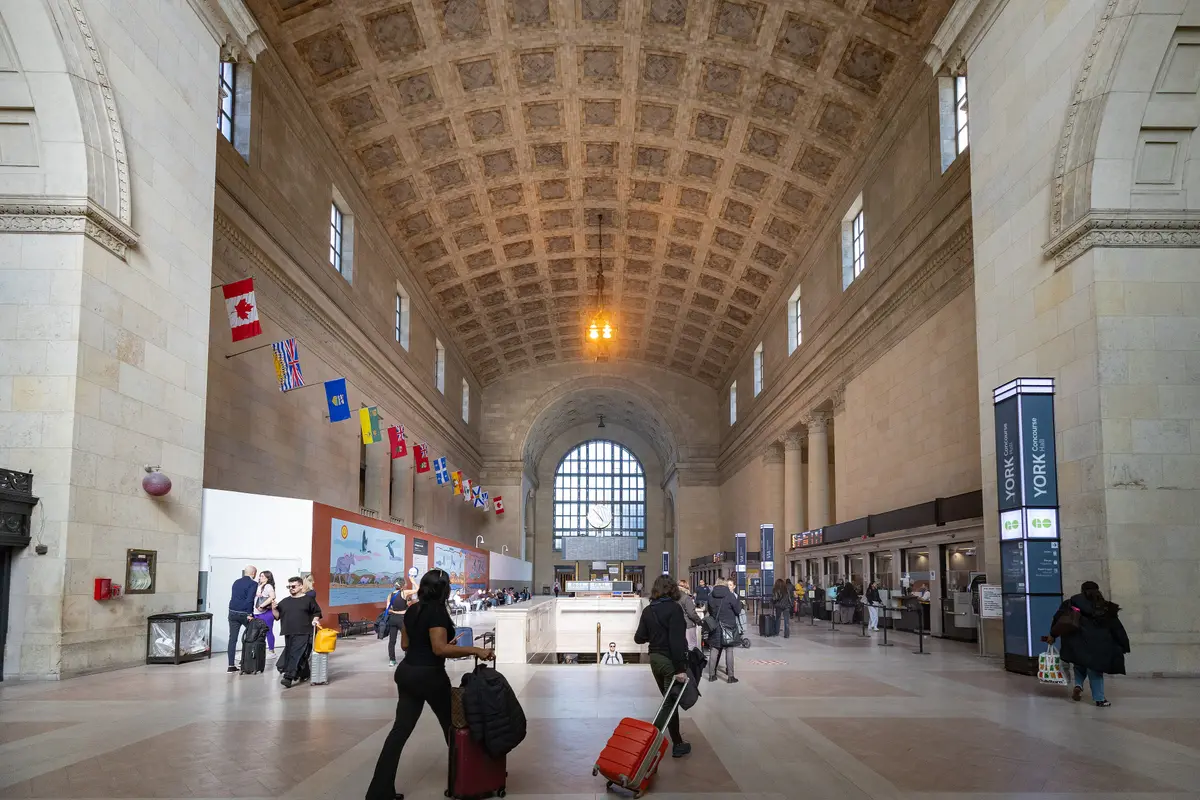
Most people cross Union Station at a jog. This is a case for walking it slowly, with your head up and your coat open, like a visitor in your own city.
Why is Union Station worth a visit on its own?
Because it is a landmark that happens to run trains. The current building opened in 1927, and the station’s history goes back to 1858 with the first of three stations. On Saturday, August 6, 1927, the Prince of Wales cut the ribbon that opened it with a pair of gold scissors. Before that, an earlier station on Front Street between York and Simcoe streets had three domed towers, one of them with a clock.
GO Transit’s own history of the station says Union Station has survived the Great Toronto Fire of 1904, hosted concerts and appeared as a backdrop in feature films, a history that reaches back before the current building. That is a lot of stories for one building, and most of them are visible if you slow down. Give yourself ten spare minutes before any trip and treat the station like a small museum with a train schedule.
What makes the architecture special?
Parks Canada designated Union Station a National Historic Site in 1975, and the station’s own history page says it was chosen as the country’s finest example of a classical Beaux-Arts railway station. The design came from a team that included architects from the Montreal firm of G.A. Ross and R.H. Macdonald, Hugh Jones of the CPR and John M. Lyle of Toronto.
Stand on Front Street and look up. Parks Canada’s heritage statement describes the building’s massing as expressed on the exterior by a giant central colonnade and a raised central attic. The plaque adds that the sweeping facade and imposing Great Hall exhibit the monumental architecture of the style. The TTC puts it simply: the terminal above ground showcases historic Beaux-Arts architecture.
What is the Great Hall like now?
Freshly restored. The City’s revitalization project concluded in July 2021, and significant restoration was completed in the Great Hall to preserve and maintain the original heritage of the station. That work included masonry to clean and revitalize the original Zumbro stone and the limestone exterior. Take a minute in the middle of the hall to tilt your head back. It is a good place to feel the scale of the age of rail.
What else should you look up at?
Two more things, one made of glass and one made of art.
- The skylights. Glass covers over the station’s pedestrian moats on Front, York and Bay streets are made of steel beams and glass, and they create a giant skylight around the perimeter of the station. They also make an enclosed space with protection from inclement weather for people entering, leaving or transferring to the subway.
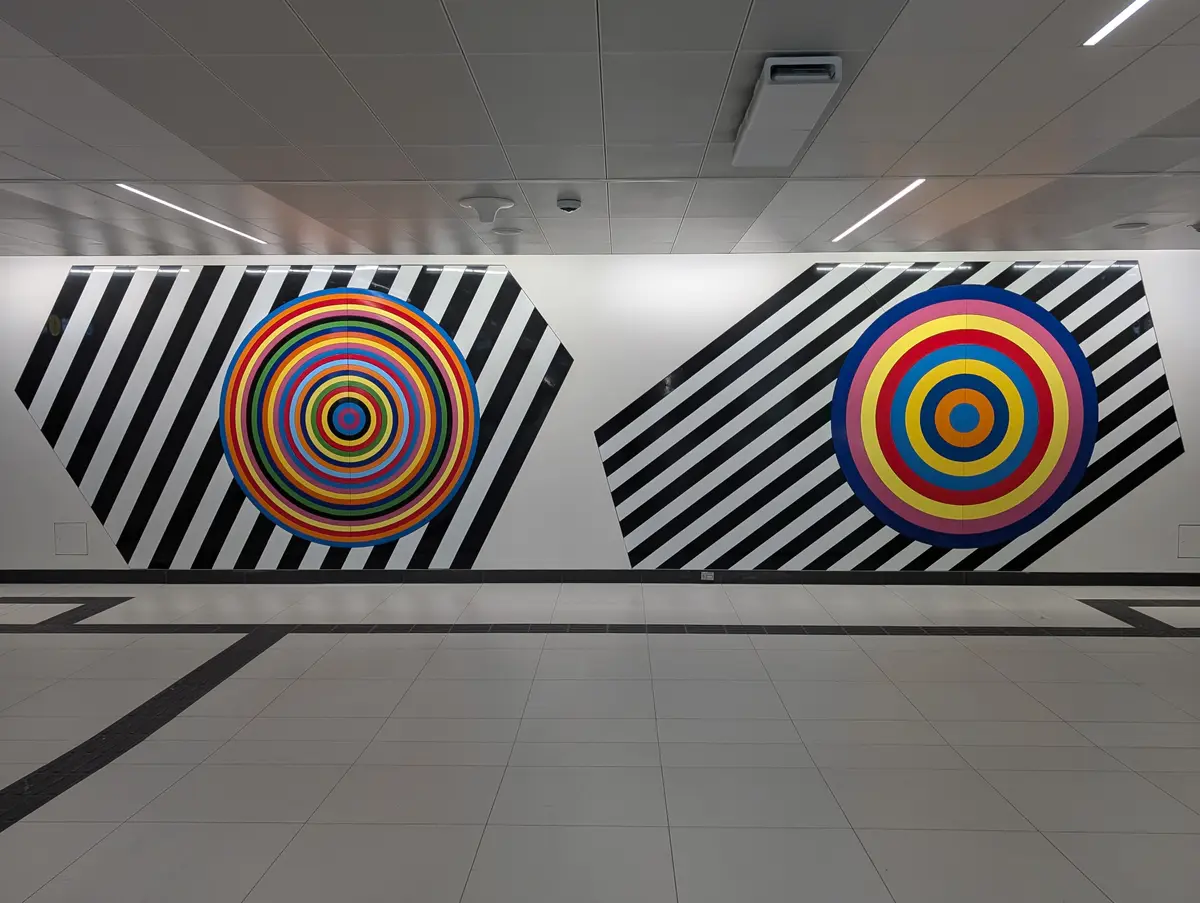
- The mural. Stuart Reid’s Zones of Immersion is a 500-foot-long glass mural, developed over six years, along a subway platform. It is a work we would cross the platform for; see our TTC station art list for eight more.
How does Union connect to the rest of the city?
Almost to everywhere. Union Station facilitates rail service from GO Transit, Via Rail, Amtrak and Ontario Northland, and GO describes the combined facility as the busiest passenger transportation facility in Canada. The TTC’s connection began in 1954 with the opening of Canada’s first subway line.
For a cold day, the PATH is the star. The Merchant Mall and the PATH network opened at Union in 1976, giving direct underground access to and from the subway. The Bay Concourse also connects to the PATH through the Bay retail area; previously, PATH access was only through the TTC. The York Concourse, which opened in 2015, offers easy connections to the train platforms, the subway and the PATH. Our PATH guide has a route plan that starts right here.
Where can you go from Union?
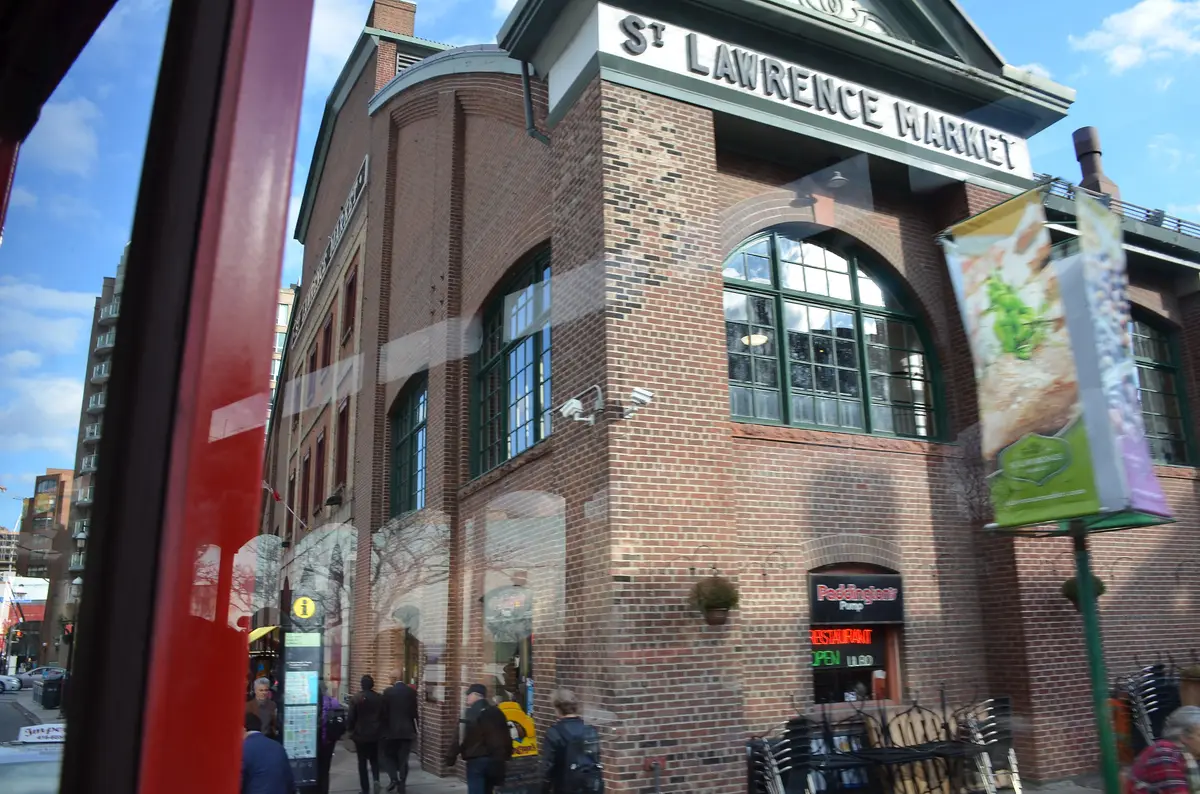
The TTC says stepping out of Union Station puts you in the centre of Toronto’s sports and entertainment district, with covered walkways to the CN Tower, Rogers Centre and Scotiabank Arena. It also says the station connects you directly to historic marketplaces, downtown retail hubs and scenic waterfront trails.
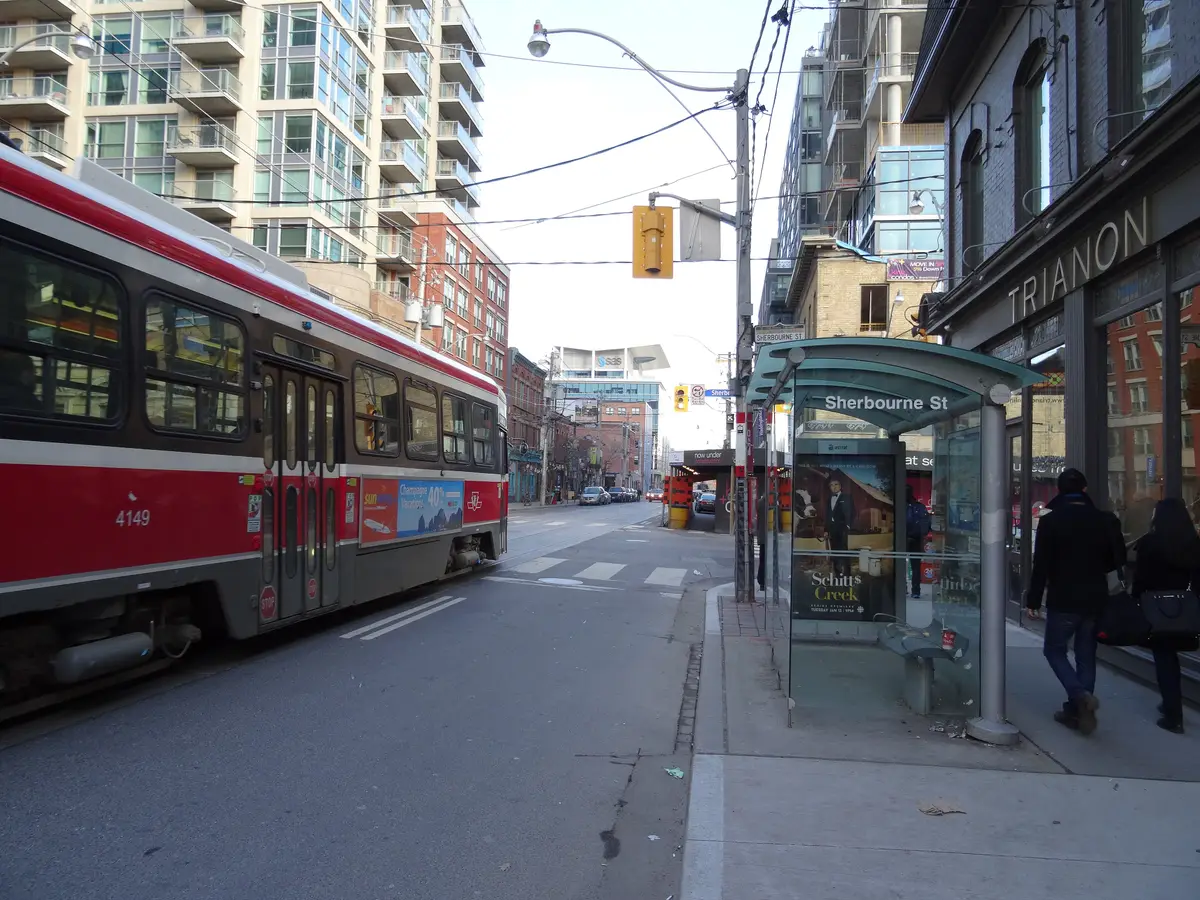
The waterfront has long been close: in 1990 the TTC opened an integrated underground streetcar loop at Union that connected the subway to the waterfront via the 509 Harbourfront. Check the TTC for current streetcar routes and stops.
Where should you eat before the train?
Start with the lower level. The Union Food Court is located in the lower retail level below the York Concourse, and the Bay Concourse connects to the Bay retail area. The Bay Concourse itself opened to the public in July 2021. Choose by mood, check each shop’s own site for hours, and leave a little time to look around before you board. A station snack eaten under a historic roof tastes better than one eaten on a platform.
How do you spend a cold day at Union?
- Enter by the Great Hall and stand still for one full minute.
- Walk under the skylights, then follow the PATH signs to wherever the day takes you.
- End with a hot drink and a look at the platform mural before you head home.
If you want more indoor ideas for a cold day, our indoor winter guide is a good next step, and our explore Toronto by transit guide maps more rides like this.
Send this to the friend who always arrives forty minutes early for the train.
Sources (5)
- Union Station: History, Facts & Map, GO Transit
- Union Station Throughout the Years, Toronto Union
- Union Station Revitalization Project, City of Toronto
- Station Spotlight: Union Station, TTC
- Union Station (Canadian Pacific and Grand Trunk) National Historic Site of Canada, Parks Canada
Spotted something out of date? Let us know.
How did this land?
Share this
“Arriving early for a train? Here is what to see at Union Station Toronto first: the Great Hall, the skylights and a 500-foot mural.”