Archive DeskFeature
History of the TTC Subway: How Toronto's Yonge Line Opened
From a 1949 groundbreaking at Yonge and Wellington to a twelve-minute ride on March 30, 1954, the story of the line the City Archives says shaped Toronto.
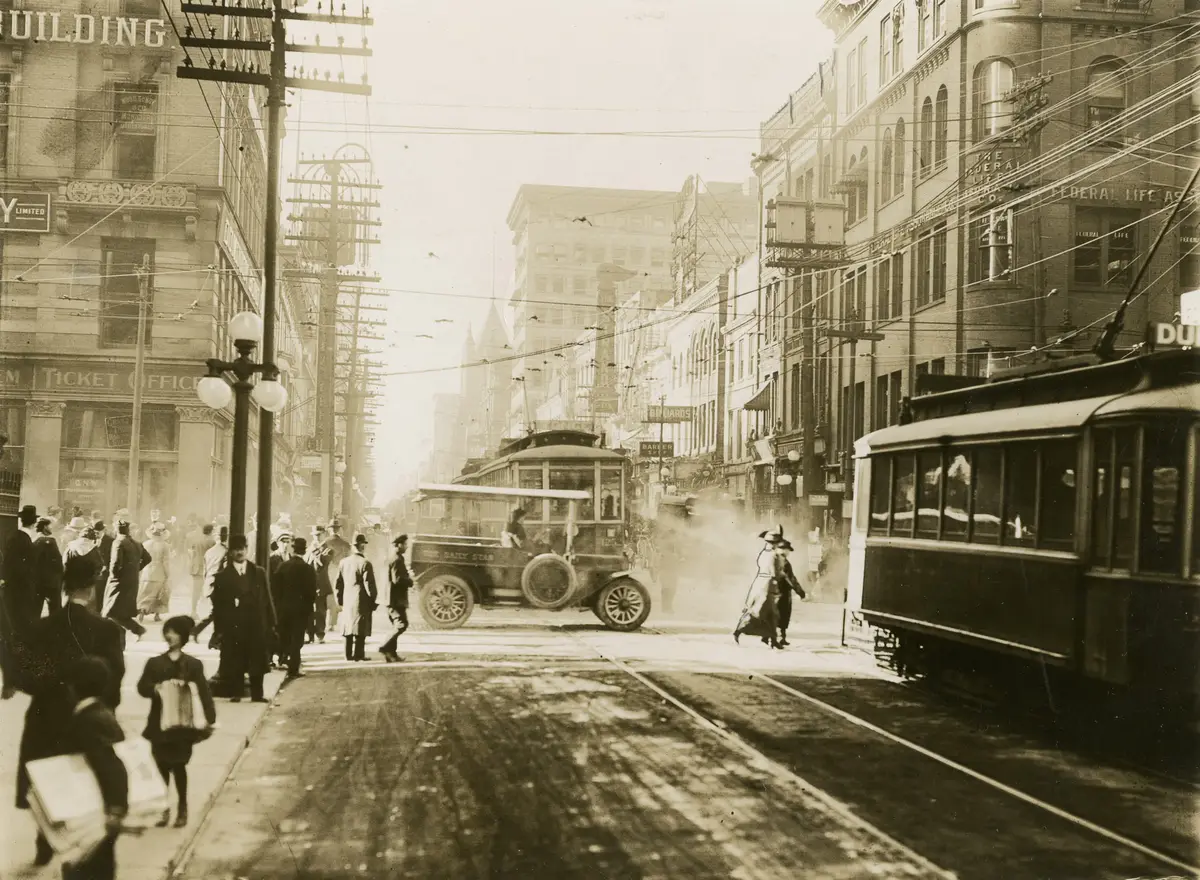
On March 30, 1954, a train full of dignitaries rolled out of Eglinton and reached Union in twelve minutes. The TTC says that day opened a new era in transportation for the nation. That ride is the heart of this story.
The Archives puts the impact plainly: the subway spurred new apartment and office construction around major intersections downtown and in midtown from Bloor Street to Eglinton Avenue, and in effect shaped modern Toronto.
When did the Yonge subway open?
The Yonge line opened on March 30, 1954. The City of Toronto Archives calls it the very first subway line in Canada, built by the publicly owned TTC between 1949 and 1954. The TTC adds that the 7.4-km line ran from Eglinton to Union and was the first post-war subway to be built in North America.
The TTC says the day was dubbed “S” Day. It is a good nickname for a day that made the city feel like it had arrived.
Why did Toronto need a subway?
The Archives says that Yonge, which it calls Canada’s longest street and Toronto’s busiest, was not wide enough for the traffic trying to use it.
The idea was not new. In an August 25, 1910 report, traffic consultants Jacobs and Davies promoted subway construction and urged Toronto to join London, Boston and New York. One of their proposals was a Yonge line from Union Station to St. Clair Avenue. By 1942 the TTC had begun to champion the development of subway service. In the municipal election of January 1, 1946, the Archives says voters approved the plan by a majority of almost ten to one.
What was planned, and what was never built?
The plan ran from Union Station to Eglinton Avenue, with twelve stations over 4.6 miles (7.4 km).
Here is the smile of the story. A Queen Street subway was proposed but never built, yet a second, lower station was built under Queen station in case it was built later. The Archives says that unused lower station is one of two, the other being under Bay station, used by the TTC for training and commercial film shoots. A station built for a line that never came is a very Toronto detail.
How do you dig a subway under Yonge Street?
Carefully, and in public. The groundbreaking on September 8, 1949, was broadcast live on radio across Toronto and attended by thousands. A stage stood at Yonge and Wellington, and Ontario’s Lieutenant Governor pushed a lever to drive the first vertical support beam into place.
Much of the downtown section was built directly under Yonge Street using the “cut and cover” method, because the street could not be closed for years. Once planking covered the excavation, traffic, including streetcars, carried on as usual.
The labour force was as varied as the city. The Archives describes thousands of people, from hard rock miners from Northern Ontario to new immigrants bringing construction skills from Europe. And Torontonians watched. The TTC encouraged its “sidewalk superintendents” and produced a series of brochures explaining the construction stages to the public. Responding to the public interest, it also produced four manuals of facts and figures to answer their questions.
When it was done, ten intermediate stations were spaced more or less evenly along the line between the Union and Eglinton terminals. Behind the scenes, by March 1954, 200 operating employees had been retrained as subway motormen, guards or carhouse operators.
What made the stations and cars feel modern?
The finishing touches were designed to feel like the future. Each station had its own tile and band colour combination, so riders could recognize their stop. The TTC tested over 100 paints in one of the earliest-built tunnels, checking for endurance against temperature and humidity extremes, abrasion, mildew and dirt.
The cars matched. They had cork and rubber floors to reduce noise, windows that opened at the top, and lighting bright enough to read by in the tunnels. They were made by the Gloucester Railway Carriage and Wagon Company, and the first order was 104 bright red cars.
What happened on opening day?
At a ceremony at Davisville station on March 30, 1954, the mayor and the Ontario premier pushed a lever to turn a signal from amber to green, symbolizing the opening of what the Archives calls Canada’s first subway line. That afternoon the public got its first chance to ride, and later that day the very last streetcar passed over the old Yonge Street tracks. The Archives says over 200,000 people rode the subway that day.
The year brought another change. In recognition of its changed scope and mandate, the Toronto Transportation Commission became the Toronto Transit Commission.
How did the subway grow after 1954?
Quickly. The City Archives says the University line’s official ground-breaking was on November 16, 1959, and its two-mile route officially opened on February 28, 1963, a date the TTC’s own list confirms.
The sources differ by a day on the next milestone. The Archives says the original Bloor-Danforth route between Keele and Woodbine opened on February 26, 1966, while the TTC’s official opening dates list February 25, 1966. Either way, the Yonge line also stretched north, with the TTC listing its extension to York Mills as opening on March 30, 1973.
How to see the history today
The City of Toronto Archives hosts the full Canada’s First Subway online exhibit, with the construction photographs behind this story. For the street the subway ran beneath, read our Yonge Street then and now and how Yonge Street got its name. For the southern terminus, see our Union Station then and now and the Union Station guide. Today’s riders can also spot the art in TTC station art, and the whole archive sits inside our history of Toronto guide.
Send this to the friend who still says the subway has always been there.
Sources (13)
- Canada’s First Subway, City of Toronto Archives
- Canada’s First Subway: Why a Subway?, City of Toronto Archives
- Canada’s First Subway: Groundbreaking, City of Toronto Archives
- Canada’s First Subway: Underground Downtown, City of Toronto Archives
- Canada’s First Subway: Finishing Touches, City of Toronto Archives
- Canada’s First Subway: Open for Business, City of Toronto Archives
- The TTC: 100 Years of Moving Toronto, Canada’s First Subway: The Back Story, City of Toronto Archives
- The TTC: 100 Years of Moving Toronto, Canada’s First Subway Opens!, City of Toronto Archives
- The TTC: 100 Years of Moving Toronto, Surface Infrastructure, City of Toronto Archives
- The TTC: 100 Years of Moving Toronto, University Subway, City of Toronto Archives
- Official Opening Dates, Toronto Transit Commission
- 60 Years Yonge, Toronto Transit Commission
- The TTC: 100 Years of Moving Toronto, Construction Begins, City of Toronto Archives
Spotted something out of date? Let us know.
How did this land?
Share this
“The Yonge subway opened on March 30, 1954, and the full story, from the 1949 groundbreaking to opening day, is a good one.”