Archive DeskFeature
How Spadina Got Its Name in Toronto: Ojibwe Roots and DEE or DYE
Spadina comes from an Anishinaabemowin word for a high place. Follow the name from a ridge to Baldwin's estate and settle the DEE or DYE question.
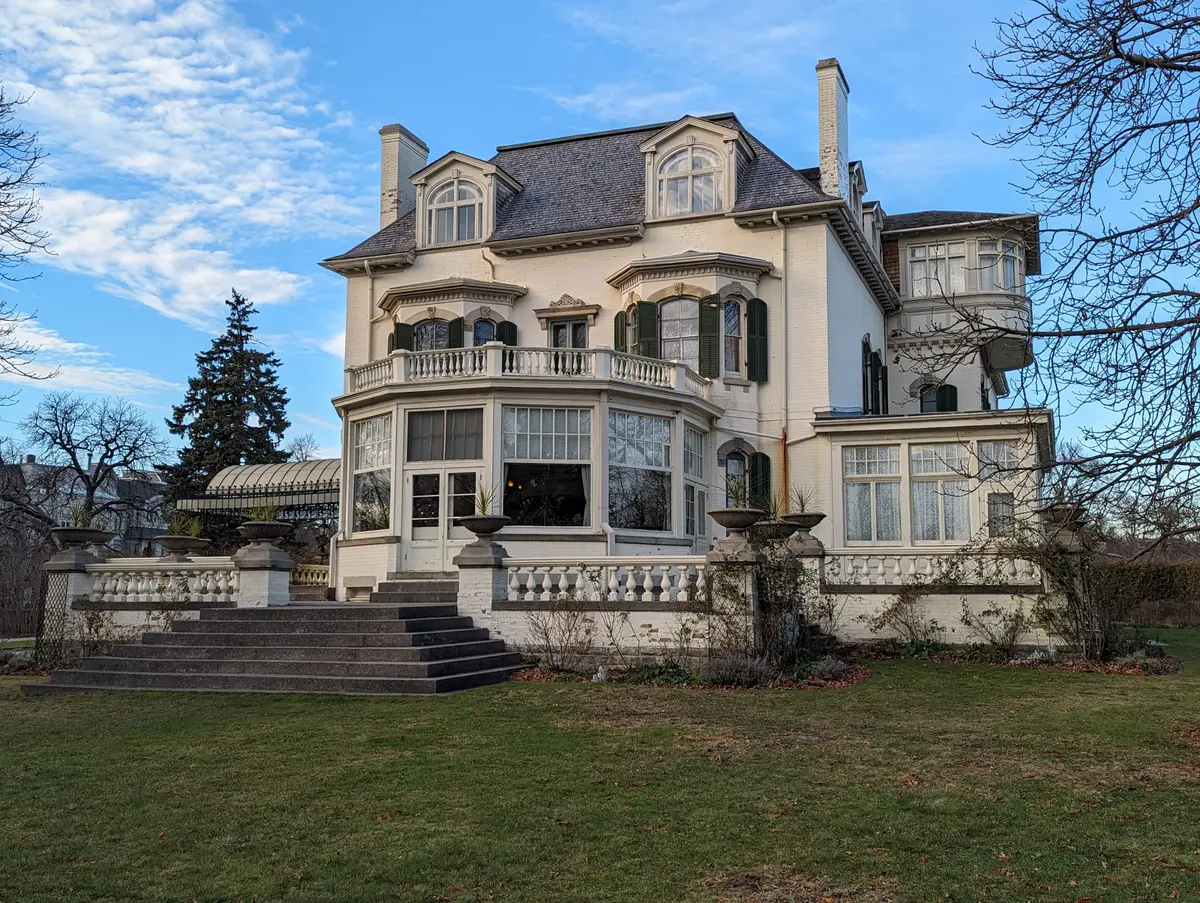
Say it out loud and Toronto splits in two: Spa-DEE-na or Spa-DYE-na? Both have a history, and the name beneath them is older than either.
What does Spadina mean?
It means a high place. The City of Toronto says Spadina Museum is named from an Anishnaabemowin word, ishpadina, meaning “highland” or “ridge.” Another City page gives the spelling Ishpadinaa and says it means “high hill” or “ridge.”
Sources do not render the word identically. Toronto Life’s 2008 “Urban Decoder” column gave the Ojibwa word as “espadinong” and glossed it as “small hill.” The spellings and the English glosses vary from source to source, so we report what each one says and leave the finer points to the language keepers. The common thread is rising ground, which suits a house that sits atop a ravine overlooking Toronto.
Who named the estate Spadina?
William Warren Baldwin. The Dictionary of Canadian Biography records that he called his country house Spadina, describing the word as the Indian word for hill, or mont. The house stood about three miles from York, on land he received as a gift from his father-in-law.
Toronto Life dates the first house to 1818, a simple, wood-framed home on a 200-acre property a few kilometres out of town. It did not last. Spadina was razed by fire, and a smaller house was erected on the site, while Baldwin also designed and built a large Georgian-style mansion in town.
How did the Austins keep the name?
By buying the place and not changing a thing on the sign. In 1866 the property was purchased by James Austin, founder of the Dominion Bank and president of Consumers Gas. He kept the name and built a grander home, which is the house we know today.
For over a century Spadina was home to three generations of the Austin family. They used their 80 acres for farming until James, and later his son Albert, subdivided and sold most of the land. What remains is a garden-sized remnant: 5.7 acres with an orchard, a grape arbour and a kitchen garden. The museum sits at the top of the Baldwin Steps, next door to Casa Loma. Start there for a slow, hill-top morning: the orchard and kitchen garden are a calm way to meet the name before you walk the streets that carry it. If you are mapping a longer day, our Casa Loma history is the next stop.
DEE or DYE: which is right?
Both are in daily use, and each has a case. Writing for TVO Today in 2023, Steve Paikin noted that the house is called Spah-DEE-nah after the original Indigenous pronunciation, rather than the Spah-DYE-nah now used in common parlance. It is the very split Toronto Life’s column title asks about: why we say Spa-DEE-na House but Spa-DIE-na Road.
How the street ended up with a different sound is less settled. When a reader asked Toronto Life in 2008 why the house is Spa-DEE-na but the road Spa-DIE-na, the magazine wrote that no one seems to know exactly how the street’s pronunciation changed over the years. Our advice is cheerful and practical: say it the way the person next to you does, and enjoy the fact that a city can hold two pronunciations at once.
Where can you see the Anishinaabemowin names today?
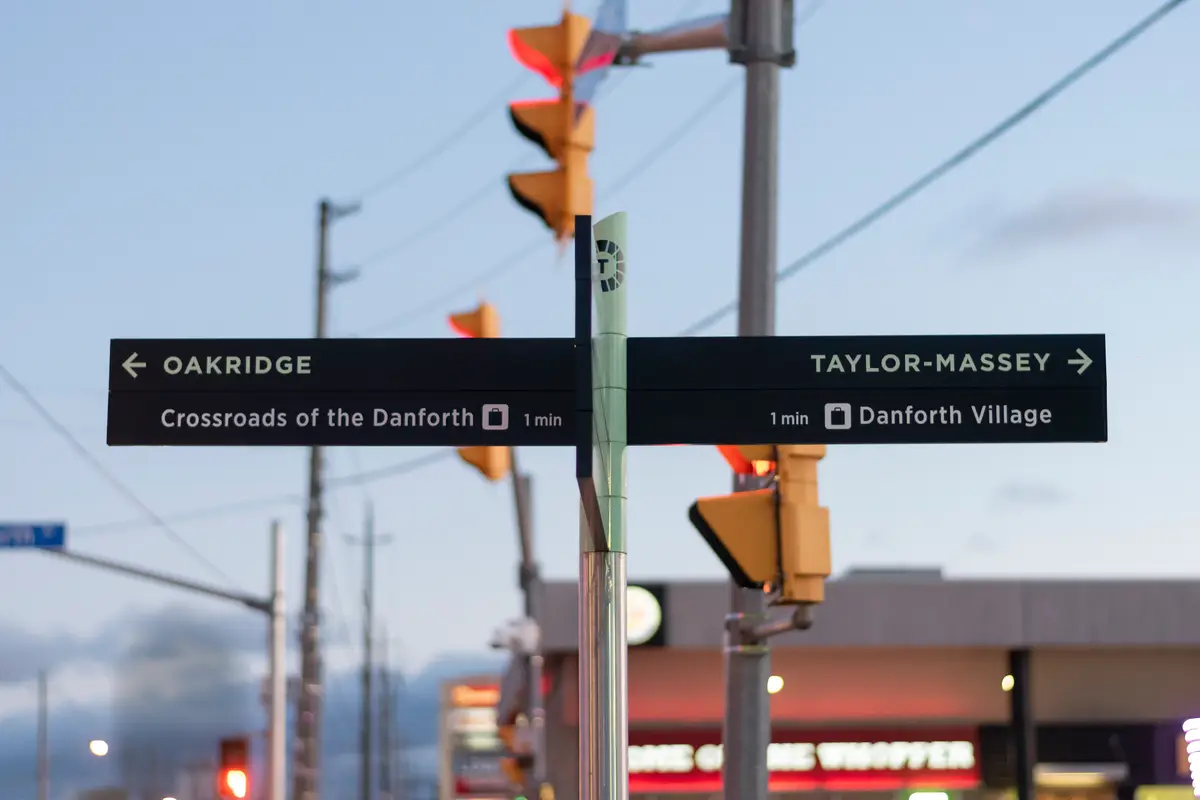
On the corners. Street signs at major intersections, such as Spadina/Davenport and Spadina/Dupont, honour the placenames in Anishinaabemowin (Ojibwe). The signs were a joint initiative by Ogimaa Mikana and the Dupont by the Castle Business Improvement Area. The Ogimaa Mikana Project describes itself as an effort to restore Anishinaabemowin place-names to the streets, avenues, roads, paths and trails of Gichi Kiiwenging (Toronto). It started with a small section of Queen Street, renamed Ogimaa Mikana (Leader’s Trail), and hopes to expand throughout downtown and beyond. A walk with a camera and a curious eye turns into a language lesson.
The same signs give a second name worth learning. The City says Gete-Onigaming, for Davenport Road, means “the old portage.” A City heritage study explains that for thousands of years Indigenous nations would have travelled Gete-Onigaming, a trail that followed the base of the escarpment ridge. The route of that ancient trail was incorporated into, and replaced by, the layout of Davenport Road. The escarpment itself was formed by the Lake Iroquois shoreline 10,000 years ago.
Rising ground, in other words, runs deep in this part of the city’s story. Next time you climb a hill near Davenport, you are in good company, and in good footprints.
Is there a library with a name for books?
Yes, and it is a small joy. Toronto Public Library’s Spadina Road branch has its name on the front of the building in Cree syllabics and roman orthography: Mahsinahhekahnikahmik, meaning “the lodge or place of the book.” The branch was created in partnership with the Native Canadian Centre, who owned the buildings at 10 and 16 Spadina Road. Say that word on the way in and the librarian may smile.
Whose land does the name sit on?
The Mississaugas of the Credit First Nation note that the cities of Etobicoke, Toronto, North York, York and Vaughan are located within the boundaries of the Toronto Purchase Treaty lands. For the wider story of the city’s own name, read how Toronto got its name, and for the streets that grew around the ridge, see Kensington Market’s history and the history of Toronto’s Chinatown. The whole series lives in our history of Toronto guide.
Send this to the friend who has been saying it the other way for years.
Sources (9)
- Spadina Museum, City of Toronto
- Indigenous Peoples Month, City of Toronto
- West Annex Phase II Heritage Conservation District Study, City of Toronto
- Baldwin, William Warren, Dictionary of Canadian Biography
- Why do we say Spa-DEE-na House, but Spa-DIE-na Road?, Toronto Life
- How Toronto's Spadina Museum is telling a new story, TVO Today
- Spadina Road branch, Toronto Public Library
- Ogimaa Mikana: Reclaiming/Renaming, Ogimaa Mikana Project
- The Toronto Purchase Treaty, No. 13 (1805), Mississaugas of the Credit First Nation
Spotted something out of date? Let us know.
How did this land?
Share this
“Spa-DEE-na or Spa-DYE-na? The name has Anishinaabemowin roots and a ridge-top story behind it.”