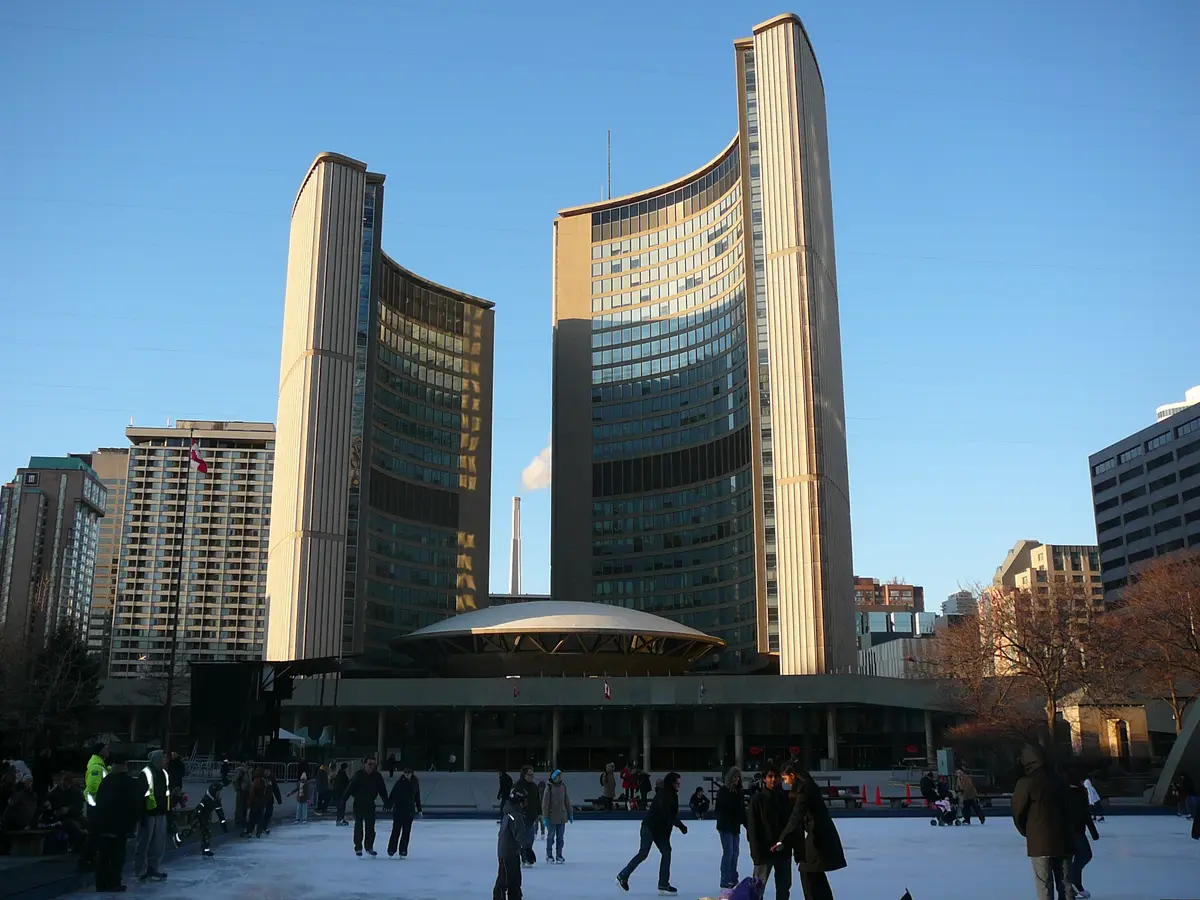
U.S. Embassy and Consulates in Canada / Wikimedia Commons / Public domain
There is a particular kind of happy that only shows up when your hands are covered in clay. Three Toronto institutions list classes where you can find it.
This guide sticks to institutions: an arts centre and two museums that each run their own craft classes. We have left out private studios on purpose, and we have left out prices too, because fees change and each class page carries its own details. Class lineups change with the season, so treat what follows as a map of where to look, then check the page before you plan.
Where can you learn a craft in Toronto?
Start with the three below. Between them they list clay, glass, metal, embroidery, sewing, weaving and dyeing, which is a decent start for a hobby you did not have a month ago.
Harbourfront Centre’s Craft & Design Residency has offered studios, mentorship, exhibition opportunities and public engagement since 1974. It is built for emerging artists working in ceramics, design, glass, metal and textiles. The part that matters to you: those artists-in-residence teach the public.
The workshops are beginner and intermediate sessions for adults aged 18 and over, taught by the Craft & Design Artists-in-Residence. They happen in the Craft & Design Studio, in the main building at 235 Queens Quay West.
The workshop list reads like a sampler. Recent listings include a glass fusing introduction where sheet glass becomes coasters, sun catchers and earrings, a six-week ceramics introduction open to beginners and anyone looking to build on their skills, a beginner metal workshop where you make a wedding or commitment band, a 3D floral embroidery session and an Introduction to Glass Blowing weekend.
Harbourfront says prices vary with the length of instruction and the materials, and that all workshops are subject to change without notice. Read the workshop page before you commit. You do not have to sign up to be curious: visitors are welcome to see the studio spaces where the artists-in-residence work. Our Harbourfront Centre guide covers the rest of the waterfront campus.
The pedestrian bridge to Harbourfront Centre.shankar s. from Dubai, united arab emirates / Wikimedia Commons / CC BY 2.02
If clay is your thing, the Gardiner Museum is the obvious next stop. The museum’s Learn & Make page describes classes for all experience levels and interests, from hand building and wheel throwing to decorating and mindfulness.
On October 20, the adult classes page listed fall 2026 sessions, including wheel throwing, hand building, sculptural pottery and sgraffito. Class lists change with each season, so check the page for what is open to register before you set your heart on a particular session.
Prefer a one-off? The Gardiner’s Single Classes page describes informal two-hour clay classes for potters of all levels, with hand-building, wheel-throwing or decorating techniques to try. Its Kids & Family Classes page describes classes and workshops for kids, teens and families. The museum is at 111 Queen’s Park.
Teapot, c. 1740, Delft tin-glazed earthenware, from the Gardiner Museum collection.Daderot / Wikimedia Commons / CC03
The Textile Museum of Canada says it supports lifelong learning through public programs and self-directed exploration with its online resources. The public programs include hands-on workshops, and its programming calendar is the place to find them.
When we looked on October 20, the October calendar listed these workshops: Introduction to Machine Sewing, Introduction to Tufting, a Red Dress Pin Beading Workshop for beginners, Introduction to Inabel Pinilian, a weaving workshop, and a Phragmites Dye Workshop. Calendars move quickly, so open the programming page for what is listed and what is open to register.
One more thing we like: the museum also facilitates workshops for families and youth at Toronto Public Library branches, and develops workshops with social agencies through its Community Makers program. The museum itself is at 55 Centre Avenue, and its Made By Many exhibition celebrates five decades of exhibitions and communities that shaped the museum.
How do you choose your first class?
Our opinion, offered with affection. Pick the material that you keep touching in shops. If you always pick up the ceramic mug, book clay. If you stare at the glass studio, pick a one-evening glass workshop and see if the spell holds. If you have a bag of mending in the closet, start with a sewing or embroidery session.
A short workshop is a low-pressure way to test a craft before you commit to a longer course. A multi-week course is where the skill gets built. Both kinds appear in the listings above.
What should you know before you book?
A few practical habits help, and they are our suggestions rather than anyone’s rules. Read the full class page, not just the title, for the level, the age requirement and the materials. Notice whether a session is a single evening or a run of several weeks. Wear clothes you do not mind getting dusty, glazed or dyed. And book early if a session catches your eye, since workshop lists change from season to season.
Harbourfront’s adult workshops are for ages 18 and over, which is worth knowing if you are planning a teen outing. The Gardiner and the Textile Museum both list programs for younger makers on their own pages.
What if you want to make things at the library?
Classes are one door among several. Toronto Public Library’s Digital Innovation Hubs are another, and our guide to library makerspaces in Toronto walks through them.