City DeskList

Art Deco Buildings in Toronto: Eight Places to See the Style

From a waterworks the City calls the Palace of Purification to a 1936 bandshell, here is where Toronto's Art Deco shows off, with access noted from each owner.

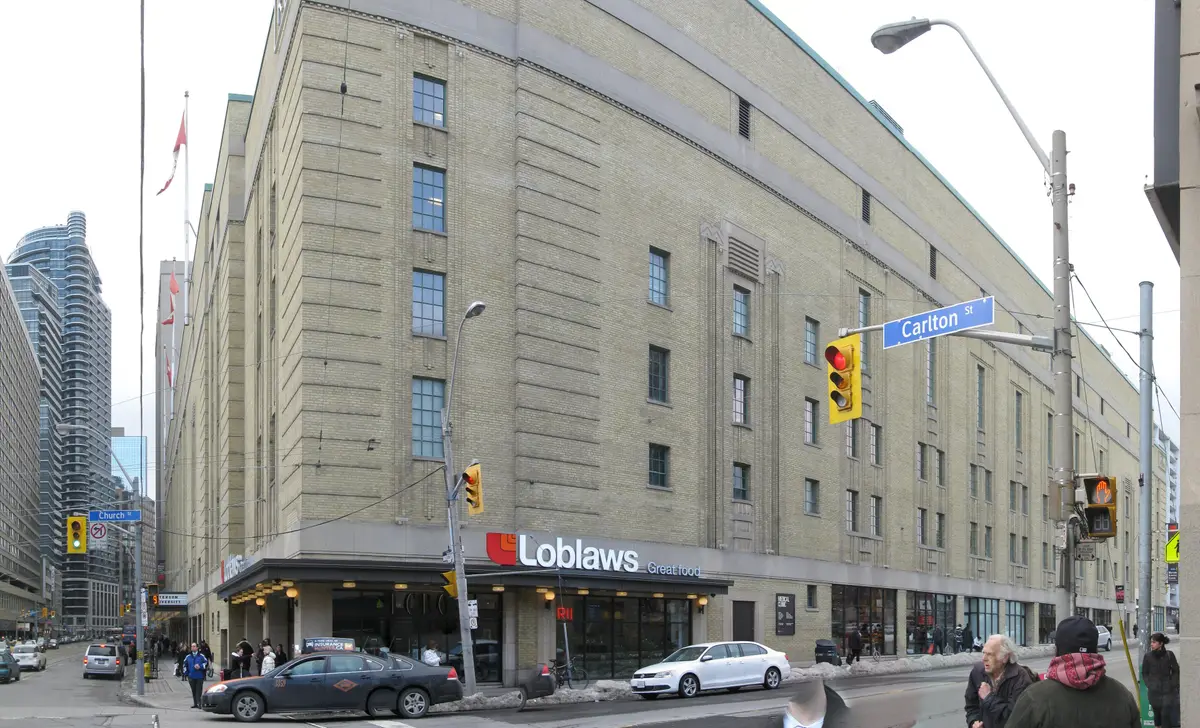
Stone-faced east facade of the former Maple Leaf Gardens, with a Loblaws storefront at street level
booledozer / Wikimedia Commons / CC0

Toronto has a run of Art Deco landmarks from the late 1920s and 1930s, and they still turn heads: geometric carving in stone, glowing opal glass and a few surprisingly grand rooms.

The style is easier to spot once you know its Toronto accent. Heritage Toronto describes Stripped Classical Art Deco, a version used in many government and financial buildings during the 1920s and 1930s, and says it incorporates flattened facades and columns with a focus on symmetry and simple designs. Keep that in mind and the list below starts to rhyme.

We have noted how to get in from each owner’s own pages. Many of these places are best admired from outside or on an open-house weekend, so check the official links before you go.

Start with the showstopper. The Doors Open Ontario listing calls it Toronto’s largest water treatment plant and the largest ensemble of Art Deco structures in the city. It was constructed in the 1930s and opened in 1941. The City dubs it “The Palace of Purification” and says it is the largest collection of Art Deco buildings in Toronto. It is named after Roland Caldwell Harris, Commissioner of Works from 1912 to his death in 1945.

How to get in: it is a Doors Open site at 2701 Queen Street East, and the listing describes a self-guided tour of the pump house and filter building. The 2026 weekend was in May, so check the City’s Doors Open Toronto page for the next dates. Read more in our R.C. Harris Water Treatment Plant spotlight.
Parks Canada’s plaque says the luxurious rooms and foyer opened in 1931 and are among the most outstanding Art Deco interiors in Canada. They were designed by Jacques Carlu and René Cera, with murals by Natacha Carlu. Think bands of white flashed opal glass lighting, geometric Monel metal and bronze finishes, and black Vitrolite. The glass chandelier and fountain in the Round Room, the plaque adds, evoke the age of radio.

The federal designation covers an auditorium, a large foyer and the former Round Room restaurant, recognized as a tour de force of Art Deco design. It became a National Historic Site of Canada in 1983. Heritage Toronto also notes the surrounding Eaton’s College Park complex shows Stripped Classical Art Deco elements.

A note on visiting: Parks Canada’s description says these rooms are now a private events venue. Check The Carlu’s own site for what it is hosting.

Hockey’s grand old arena has Art Deco bones. Parks Canada says its simple aesthetic draws on Art Deco and Art Moderne styles of streamlined form and decorative geometrics. The stone-faced brick façades rise 27 metres, with verticality emphasized by simple geometric shapes carved into the stone. The plaque notes it was the country’s largest arena when it was built in 1931 and home to the Toronto Maple Leafs for 68 years.

How to get in: Toronto Metropolitan University has transformed it into the Mattamy Athletic Centre, a National Historic Site of Canada. Check the university’s athletics site for events and access. From the sidewalk, look up at the geometry in the stone.

Exhibition Place’s own architecture pages call the Bandshell a fine example of Art Deco design that embodied the latest in acoustical engineering and stage lighting when built. It was erected in 1936 at the west end of the grounds as a permanent structure to replace earlier open-air bandstand stages. Craig & Madill Architects designed it, and the exterior is decorated with stylized musical notes. Our pick for a golden-hour photo.

How to get in: it sits on the Exhibition Place grounds, so check the Exhibition Place site for current access.

Exhibition Place says the Horse Palace has been described as one of the finest Art Deco buildings in the City of Toronto. Its Art Deco elements include a hard-edged angular composition, cubist forms and strong horizontal and vertical planes, plus low relief sculptured friezes of horses on the exterior. When it opened in 1931 it was billed as one of the finest equestrian facilities in Canada. Find the horse friezes; they are the smile of this stop.

How to get in: check Exhibition Place’s site for grounds access and event days.

Completed in 1929, the Automotive Building was designed for the Canadian National Exhibition to showcase the latest advancements in the automotive industry. Exhibition Place calls it an Art Deco masterpiece with lakeside views, connected to Enercare Centre.

How to get in: Exhibition Place describes it as a conference centre designed for meetings, conventions and galas, so see its venue page for what is on.

Carved stone detail on the Automotive Building, Exhibition PlaceThomas1313 / Wikimedia Commons / CC BY-SA 4.0

Heritage Toronto says 19 and 21 Dundas Square, built in 1913 and 1929, are together known as the historic Hermant Building, anchoring the southeastern edge of Yonge-Dundas Square, now Sankofa Square. Number 21, designed by Benjamin Brown, displays a high degree of craftsmanship through its Art Deco influences and decorative paneling. The buildings are designated under Part IV of the Ontario Heritage Act.

How to get in: this one is a street-level admirer. Stand in the square it anchors and look up.

The Hermant Building, TorontoTheTrolleyPole / Wikimedia Commons / CC BY-SA 4.0

City Architect J. J. Woolnough designed the Water Works Buildings at 505 Richmond in the Art Deco style, and they were completed in 1933. The reuse of the municipal complex won the 2022 Heritage Toronto Adaptive Reuse Award. Heritage Toronto notes that the site, once owned by the City, operated as a public market from 1837 to around 1900.

How to get in: Heritage Toronto’s page describes the reuse of the complex for a mix of uses, so view the exterior from the street and check the property’s own site for what is open.

How many Art Deco buildings can you see in a day?

Pair two stops in a day, and let our Toronto architecture guide put them in the wider story. If City Hall is next on your list, read our Toronto City Hall architecture feature, and plan your next open-house weekend with the Doors Open Toronto guide. For wall art after the stone, our Toronto murals list takes you outdoors.

Send this to the friend you would bring to look up with.

Sources (11)
  1. R.C. Harris Water Treatment Plant (Doors Open Ontario), Ontario Heritage Trust / Doors Open Ontario
  2. Fast Facts about the City's Water Treatment Plants, City of Toronto
  3. Eaton's 7th Floor Auditorium and Round Room National Historic Site of Canada, Parks Canada
  4. The Carlu (Doors Open Ontario), Ontario Heritage Trust / Doors Open Ontario
  5. Architecture of a Neighbourhood: Downtown Yonge Street, Heritage Toronto
  6. Maple Leaf Gardens National Historic Site of Canada, Parks Canada
  7. Mattamy Athletic Centre (MAC), Toronto Metropolitan University Athletics
  8. Architecture Spotlight, Exhibition Place
  9. Automotive Building, Exhibition Place
  10. The Hermant Building, Heritage Toronto
  11. Adaptive Reuse Winner 2022, Heritage Toronto

Spotted something out of date? Let us know.

How did this land?

Send this to the friend you would bring.

Share this

“Saving this for a design-lover's day out: eight Toronto Art Deco landmarks, with how to get in noted from each owner.”

More from Downtown

Next story