Archive DeskFeature
History of Scarborough: How the Name Took Root
Scarborough's name came from a view of the bluffs in 1793. Follow it from a renamed township to village names, a baby-boom suburb and a civic centre.
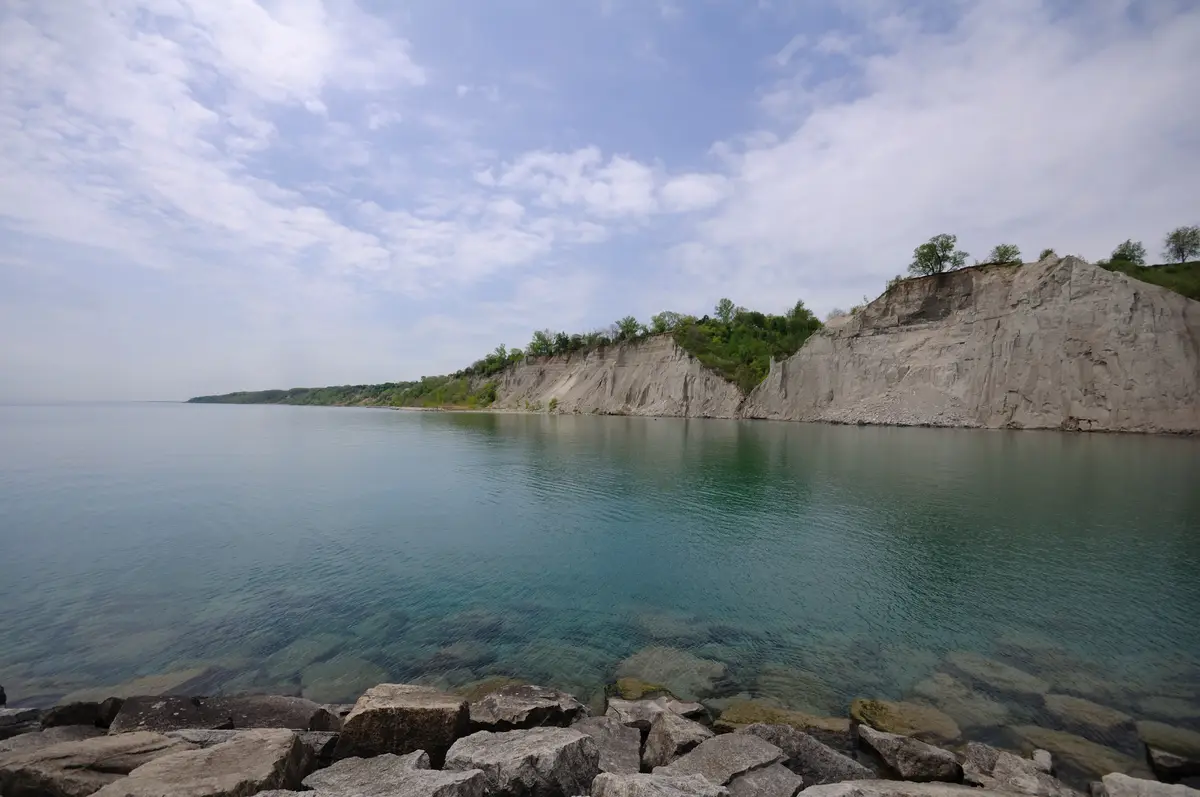
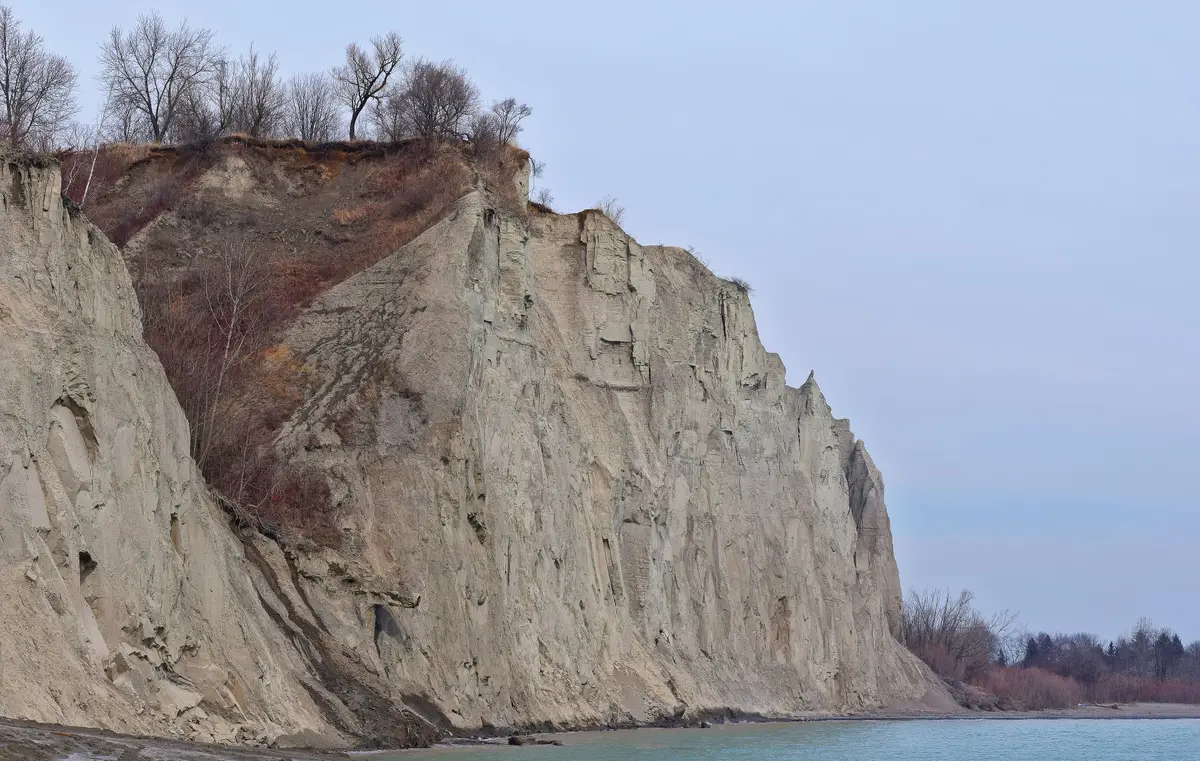
Scarborough got its name from a view. In 1793, bold highlands on Lake Ontario’s north shore reminded a visitor of cliffs in Yorkshire, England, and the name stuck. It is a small origin story for a place that grew very large, and it is worth knowing before you walk the bluffs or ride to the museum.
Who named Scarborough, and why?
In 1793 Elizabeth Simcoe noted that the bold highlands east of Toronto resembled the chalk cliffs of Scarborough in Yorkshire, England. The Scarborough Historical Society says her husband, Lieutenant Governor John Graves Simcoe, then renamed the newly surveyed township north of the bluffs from Glasgow to Scarborough. The City’s Archives exhibit credits Elizabeth Simcoe herself with the renaming, since the bluffs along the shore of Lake Ontario reminded her of Scarborough in Yorkshire.
A related name has a similar story. Simcoe’s description of the township of Glasgow, as Scarborough was first called, spoke of its high lands, and the river flowing through the high land became known as Highland Creek. The first land patents followed in 1796, and the township was opened to new settlement. If you love name stories, our piece on how Toronto got its name belongs on the same shelf.
What was here before the name?
People, for centuries. Members of the Huron-Wendat First Nations lived on the land now called Scarborough, evidenced by the 1956 discovery of their burial ground in Tabor Hill Park at Bellamy Road and Lawrence Avenue East. The Scarborough Historical Society names the Thomson family, who arrived around 1799, as its first permanent settlers, after years in which many grant holders stayed away.
How did Scarborough’s villages get their names?
Scarborough began as a dispersed group of small communities, including Scarboro Village, Birch Cliff, Wexford, Agincourt, Woburn, Ellesmere, Bendale, Malvern, Armadale, Highland Creek, West Hill and Port Union. Because Scarborough covers a huge area, it never grew a single main street. It developed many crossroads communities with distinct names and personalities, and many of those names have survived into the present. That is why a Scarborough address still tells you so much, and a few of the stories behind the names are delightful.
Agincourt’s name dates to June 1, 1858, when a storekeeper was granted a post office. A friend who was a member of parliament from Canada East offered to help if the post office had a French name. The name Agincourt, after a town in northern France, satisfied that French-Canadian friend without offending the storekeeper’s English and Scottish neighbours. Birch Cliff is said to come from the many birch trees on a property on the bluffs, which prompted the name for a cottage there. Wexford took its name from Wexford County, Ireland, and became officially known as Wexford in 1865 when a post office opened.
Roads got renamed too. The road cut along the lake in the early 1800s was improved and straightened in 1817 and renamed Kingston Road.
How did farms become a borough and a city?
Slowly, then all at once. Scarborough was incorporated as a township in 1850, became a borough in 1967 and was incorporated as a city in 1983. For a hundred years it was mostly rural, with farms, mills along the Rouge River and Highland Creek, and a few roads, stores, schools and churches.
Then the post-war boom arrived. Between 1950 and 1955 the population doubled from 48,000 to 110,000, tripling again between 1955 and 1970, and Highway 401’s opening in 1956 accelerated the trend. After the war the area around Eglinton Avenue East became known as the Golden Mile commercial district, and the township’s first proper municipal building opened at 2001 Eglinton Avenue East in September 1956. Our Golden Mile guide follows that corridor into the present.
On January 1, 1998, the six area municipalities, Scarborough among them, amalgamated to form the new City of Toronto.
What is the Scarborough Civic Centre story?
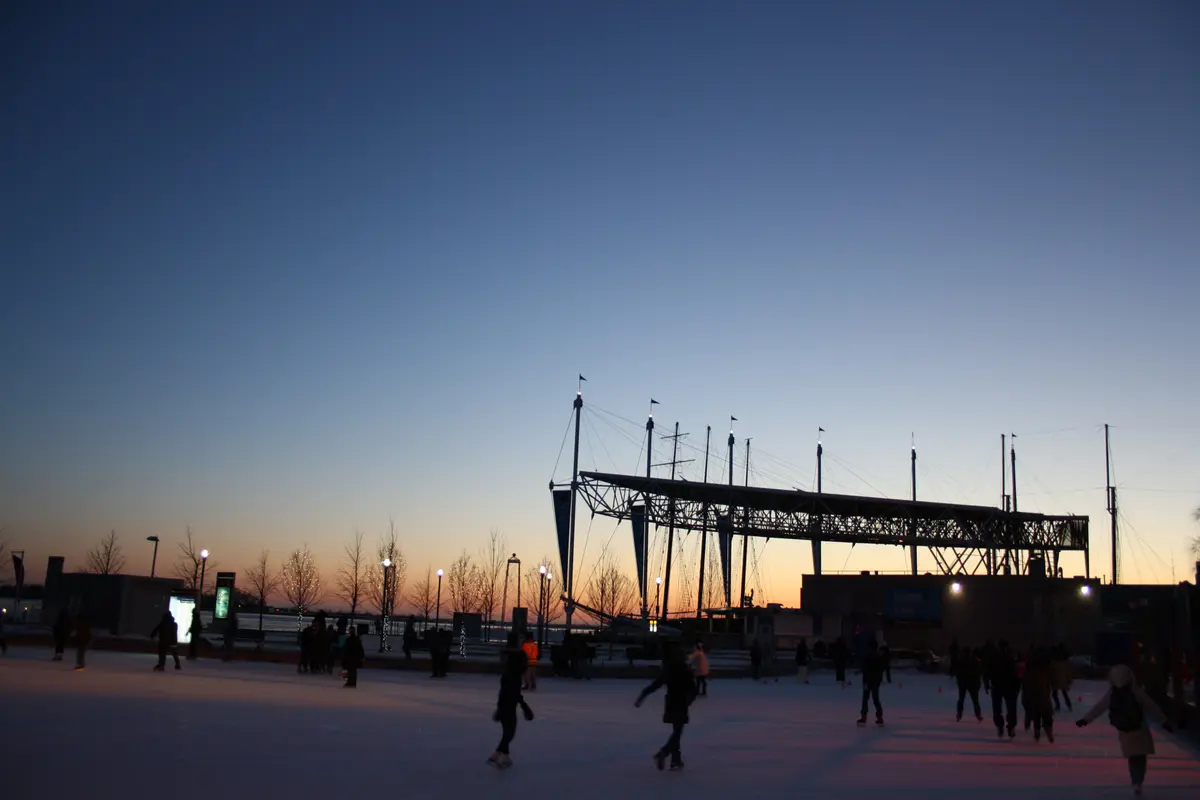
The civic centre has a story of its own. The Scarborough Civic Centre opened on June 29, 1973, with Queen Elizabeth II doing the honours, and was designed by Canadian architect Raymond Moriyama. The City’s news release says the centre’s 50th-anniversary celebration recognized its legacy as the first planned town centre in North America. A new koi fish joined the pond installed when the centre opened, as part of that anniversary year. The City’s squares page says a skating rink at Albert Campbell Square, at the civic centre, is open to the public during the winter months.
Where can you see Scarborough’s history today?
Scarborough Museum is the obvious first stop. Four heritage buildings sit in Thomson Memorial Park, and general admission is free. The Cornell House was constructed in 1858 and is furnished to show rural village life circa 1914. The McCowan Log House was built in the 1830s, restored to portray settler life in the 1850s, and moved to the museum in 1974. The Hough Carriage Works displays carriage making equipment and artisans’ tools.
The museum invites visitors to learn how Scarborough developed from land farmed by Indigenous peoples and settlers to a major suburb of North America’s fourth largest city. It is at 1007 Brimley Road, and the 21 Brimley bus from Kennedy Subway Station stops outside the park entrance. The Scarborough Historical Society, established in 1956, helped move the Cornell House to the park in 1962. Our guide to City of Toronto history museums puts it beside the other sites.
After the history, go see the thing that started it all. Our Scarborough Bluffs guide is built around a safe, scenic viewing plan, and our Scarborough neighbourhood hub gathers the rest.
Send this to the friend who grew up in Scarborough and ask which village name they never knew the story behind.
Sources (11)
- The Naming of Scarborough, Scarborough Historical Society
- Scarborough Before the Civic Centre, City of Toronto Archives
- Highland Creek, Scarborough Historical Society
- Agincourt, Scarborough Historical Society
- Birch Cliff, Scarborough Historical Society
- Wexford, Scarborough Historical Society
- Scarborough Museum, City of Toronto
- Resources on Former Municipalities, City of Toronto Archives
- City of Toronto celebrates 50th Anniversary of Scarborough Civic Centre, City of Toronto
- Timeline, Scarborough Historical Society
- Book a City Square, City of Toronto
Spotted something out of date? Let us know.
How did this land?
Share this
“Saving this for a Scarborough wander: how a look at the bluffs in 1793 gave Toronto's east end its name.”